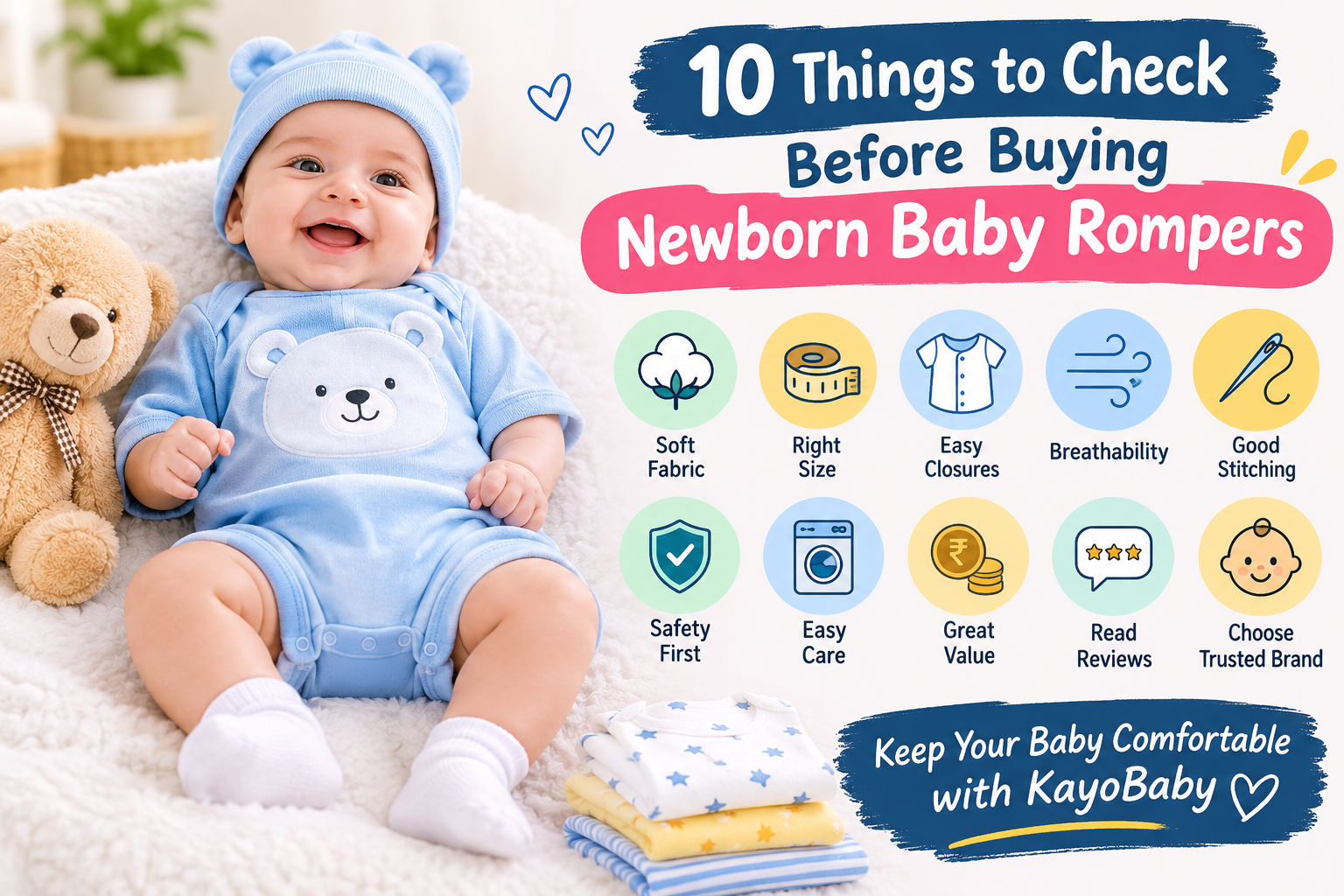
Shopping for your newborn's first clothes is exciting, but choosing the right outfits requires more attention than simply picking cute colours and attractive prints. Newborn babies have delicate skin, need frequent clothing changes, and spend much of their time sleeping or resting. Their clothes should therefore be comfortable, easy to wear, gentle on the skin, and practical for everyday use.
Newborn baby rompers are among the most useful clothing options for the first few months. They combine a top and bottom into one outfit, making dressing easier while keeping your baby comfortably covered. However, not every romper offers the same level of comfort, quality, or convenience. Fabric, sizing, stitching, closures, and seasonal suitability can all influence your buying decision.
Whether you are preparing a newborn wardrobe, shopping for your first baby, or buying a thoughtful gift for new parents, knowing what to check before purchasing can help you make a better choice.
Here are 10 important things to consider before buying newborn baby rompers.
1. Choose Soft and Skin-Friendly Fabric
Fabric should be your first consideration when buying clothes for a newborn. A baby's skin is delicate, so rough, stiff, or poorly finished materials may cause discomfort and irritation.
Cotton is a popular choice for newborn clothing because it is generally soft, breathable, and comfortable for everyday wear. It also works well for babies who need multiple outfit changes throughout the day.
When shopping for newborn baby rompers, consider the following fabric options:
- 100% Cotton: A practical choice for everyday clothing because it is soft and breathable.
- Cotton Blends: These may offer additional stretch, depending on the material composition.
- Organic Cotton: A potential option for parents who prefer cotton grown under certified organic standards.
- Lightweight Cotton Jersey: A comfortable fabric choice for regular indoor wear and warmer weather.
Before purchasing, check the fabric composition rather than relying only on product descriptions such as premium, natural, or baby-soft.
For everyday use, lightweight cotton newborn baby rompers can be a practical addition to your baby's wardrobe.
2. Check the Correct Newborn Size
Choosing the right size is important for both comfort and ease of movement. A romper that is too tight may restrict your baby's natural movements, while an oversized outfit may bunch up and become uncomfortable.
Baby clothing sizes are usually based on age, but babies grow at different rates. A newborn-sized romper may not fit every baby in exactly the same way.
Before ordering, check the brand's size chart and pay attention to:
- Recommended age range.
- Baby's approximate weight.
- Chest measurements.
- Length of the romper.
- Stretch and flexibility of the fabric.
If you are shopping before your baby is born, consider purchasing a small number of newborn-size outfits along with some slightly larger sizes.
Another useful tip is to check whether the romper has enough room around the diaper area. Babies wear diapers throughout the day, so a comfortable fit around the lower body is essential.
KayoBaby offers baby clothing options designed for different age groups, making it easier for parents to explore suitable sizes while building a newborn wardrobe.
3. Look for Convenient Buttons and Closures
Newborns need frequent diaper changes, so the design of a romper can make everyday parenting easier or more difficult.
Imagine changing your baby's diaper several times during the night. If you need to remove the entire outfit every time, the process can become inconvenient.
This is why closures deserve careful attention.
Common closure options include:
Snap Buttons
Snap buttons are commonly used around the crotch and lower front area. They allow parents to open the bottom section without removing the entire outfit.
Front Buttons
Front-opening designs can make dressing and undressing easier, especially for parents who are still getting comfortable handling a newborn.
Zipper Closures
Zippers can make dressing quicker, but check that they include suitable protective fabric near the neckline and do not press against the baby's skin.
When comparing newborn baby rompers, look for closures that are secure, smooth, and easy to operate. Avoid designs with loose buttons or rough edges.
4. Consider Breathability and Seasonal Suitability
Your baby's clothing should suit the surrounding temperature. An outfit that works well during winter may not be appropriate for a hot summer afternoon.
For warmer weather, lightweight and breathable newborn baby rompers are generally a practical choice. They help reduce unnecessary layering and make your baby more comfortable indoors.
For colder conditions, consider:
- Full-sleeve rompers.
- Slightly thicker cotton fabrics.
- Footed baby rompers, when suitable for the temperature.
- Comfortable outfits that allow additional layers when needed.
For summer, look for:
- Half-sleeve or sleeveless designs.
- Lightweight cotton material.
- Comfortable neck openings.
- Loose-fitting designs that do not restrict movement.
Parents should also consider indoor conditions. Air conditioning, room temperature, and ventilation can affect how many clothing layers a baby needs.
Avoid dressing your newborn in too many layers. Check your baby's chest or back to assess whether they feel comfortably warm rather than relying only on their hands and feet.
5. Examine Stitching and Overall Construction
A romper may look attractive in product photographs, but its construction determines how well it performs during regular use.
Newborn clothing comes into direct contact with delicate skin. Rough seams, loose threads, and poorly finished edges can cause unnecessary discomfort.
Before purchasing, inspect the product images and descriptions for details about:
- Smooth inner seams.
- Properly finished edges.
- Securely attached buttons.
- Consistent stitching.
- Comfortable neck and arm openings.
- Durable fabric construction.
Pay special attention to the areas around the shoulders, underarms, neckline, and leg openings.
These sections experience regular movement when babies stretch, kick, and move their arms.
A well-constructed newborn romper should feel comfortable without having rough seams or unnecessary decorative elements inside the garment.
If possible, check customer reviews for feedback about stitching quality, fabric durability, and how the romper looks after washing.
6. Choose Designs That Make Dressing Easier
Newborns require gentle handling, particularly during their first few weeks. Clothing with complicated designs can make dressing and undressing unnecessarily difficult.
Look for rompers that have practical features such as:
- Wide and comfortable neck openings.
- Front-opening or wrap-style designs.
- Flexible fabric around the arms and legs.
- Easy-to-use snap closures.
- Simple designs without excessive decorative elements.
Some newborn baby rompers have envelope-style necklines that make it easier to pull the garment over the baby's head.
Others feature front openings that allow parents to dress their baby without moving clothing over the head.
If you are buying clothes for your first newborn, simple designs are often more practical than complicated outfits with multiple layers, decorative accessories, or difficult fastenings.
The goal is to choose clothing that makes everyday dressing more manageable while keeping your baby comfortable.
7. Check the Safety of Prints, Buttons and Decorations
Attractive prints and cute designs make baby rompers appealing, but safety should always come before appearance.
Some outfits include bows, decorative buttons, ribbons, appliques, or other embellishments. These features may look attractive but require careful inspection.
Before purchasing, check that:
- Buttons are firmly attached.
- Decorative elements cannot easily come loose.
- There are no sharp edges or exposed fasteners.
- Ribbons and cords are not excessively long.
- Prints do not have rough or uncomfortable surfaces.
- The garment does not contain unnecessary detachable accessories.
Avoid clothing with small detachable parts that could become choking hazards.
Also, check the product's care instructions. Some printed garments require gentle washing to maintain their appearance.
Parents should prioritise simple, well-finished newborn clothing over outfits with excessive decorations.
A cute design is a bonus, but comfortable construction and safe detailing are more important.
8. Evaluate Washing and Maintenance Requirements
Newborn babies frequently spill milk, drool, and have diaper leaks. As a result, their clothes need regular washing.
Buying a romper that requires complicated care can make daily laundry more difficult.
Before purchasing newborn baby rompers, check the washing instructions and consider whether the garment is suitable for regular use.
Look for products that offer:
- Easy machine-washing instructions, where permitted by the care label.
- Colourfast prints.
- Fabric that maintains its shape after washing.
- Durable stitching.
- Minimal shrinkage when washed according to instructions.
For the first wash, follow the garment's care label and consider using a mild, fragrance-free detergent suitable for baby clothes.
Wash new baby clothing before the first use to remove dust or residues from manufacturing, packaging, and handling.
It is also helpful to separate light and dark-coloured clothes to reduce the risk of colour transfer.
A romper that is easy to wash and maintain can offer better everyday convenience than an outfit that requires special care.
9. Compare Price with Quality and Practical Features
Price is another important factor when building a newborn wardrobe. Babies grow quickly, so spending too much on outfits that may only fit for a short period is not always practical.
However, choosing the cheapest available option may also result in compromises in fabric quality, stitching, or comfort.
Instead of comparing prices alone, evaluate what you are getting for the amount you spend.
Consider these factors:
- Fabric composition and softness.
- Quality of stitching and finishing.
- Number of pieces included in a set.
- Closure design and convenience.
- Seasonal suitability.
- Washing and maintenance requirements.
- Size availability.
For example, a slightly more expensive cotton romper with convenient snap closures and durable stitching may be a more practical everyday purchase than a cheaper outfit with uncomfortable seams.
Parents can also consider multipacks or coordinated clothing sets if they need several outfits.
However, always check whether the products included in a set are available in suitable sizes and whether each piece offers practical everyday use.
KayoBaby provides baby clothing options that parents can explore when comparing designs and selecting comfortable outfits for their little ones.
10. Read Customer Reviews and Check Brand Reliability
Product photographs and descriptions provide useful information, but customer reviews can help you understand how an outfit performs after purchase.
Before ordering newborn baby rompers online, spend a few minutes reading reviews from other buyers.
Look for feedback about:
Actual Size: Does the romper fit according to the size chart, or do customers recommend sizing differently?
Fabric Quality: Does the material feel soft and comfortable after washing?
Colour and Print: Does the delivered product match the photographs?
Stitching: Are customers satisfied with the finishing and construction?
Durability: Does the outfit maintain its shape and appearance after regular use?
You should also check the brand's return, exchange, and shipping policies before placing an order.
A reliable online shopping experience includes clear product descriptions, accurate size information, accessible customer support, and transparent policies.
When shopping from KayoBaby, explore the available baby clothing styles and check individual product details to select options that match your baby's requirements.
Common Mistakes to Avoid When Buying Newborn Baby Rompers
Even after considering fabric and design, parents sometimes make purchasing mistakes that affect the usefulness of their baby's wardrobe.
Here are some common mistakes worth avoiding:
1. Buying Too Many Newborn Sizes
Babies grow quickly, and some may outgrow newborn clothing sooner than expected. Avoid purchasing too many outfits in the smallest size.
2. Prioritising Appearance Over Comfort
Cute prints and attractive designs are appealing, but fabric quality, stitching, and fit should always come first.
3. Ignoring the Diaper Area
A romper should provide enough room for a diaper without becoming too tight around the lower body.
4. Overlooking Washing Instructions
Newborn clothes need frequent washing. Always check whether the garment can handle regular cleaning according to its care label.
5. Choosing Complicated Closures
Difficult buttons and uncomfortable neck openings can make dressing more time-consuming.
6. Ignoring the Weather
Buying only full-sleeve or only half-sleeve outfits may limit how useful your wardrobe is across changing temperatures.
How Many Newborn Baby Rompers Should You Buy?
The ideal number depends on your laundry routine, climate, and how frequently your baby needs outfit changes.
As a practical starting point, parents can consider purchasing around 6–8 everyday rompers for the initial newborn wardrobe, adjusting the quantity according to their circumstances.
A useful clothing collection might include:
- 3–4 lightweight cotton rompers for everyday wear.
- 2 full-sleeve options for cooler conditions.
- 1–2 additional outfits for outings or special occasions.
You do not need to purchase everything in newborn size. Include a few larger sizes so you have comfortable clothing available as your baby grows.
If your baby experiences frequent spit-ups or diaper leaks, having a few extra outfits can be helpful.
The best approach is to start with essential clothing and purchase additional pieces as you understand your baby's needs.
Why Choose KayoBaby for Your Baby's Clothing Needs?
Choosing baby clothing is about finding the right balance between comfort, functionality, design, and value.
KayoBaby offers baby clothing options for parents who want to explore practical and attractive outfits for their little ones. When selecting products, parents can compare different designs, check available sizes, and review product details to find clothing suitable for everyday use.
Whether you are preparing a newborn wardrobe, shopping for a baby shower, or looking for comfortable clothing for your little one, consider the features that matter most:
- Soft and comfortable materials.
- Practical designs for regular dressing.
- Suitable sizing for growing babies.
- Attractive styles and prints.
- Easy-to-maintain clothing options.
Taking the time to compare these features can help you select outfits that are useful beyond their appearance.
Frequently Asked Questions About Newborn Baby Rompers
1. What is the best fabric for newborn baby rompers?
Cotton is a popular choice because it is generally soft, breathable, and suitable for everyday baby clothing. Lightweight cotton is particularly useful in warmer weather. Always check the fabric composition and garment construction before buying.
2. Are newborn baby rompers suitable for everyday wear?
Yes. Newborn baby rompers can be suitable for everyday wear because they combine the top and bottom into one garment. Choose comfortable fabrics, appropriate sizing, and easy-to-use closures for regular use.
3. How many newborn rompers does a baby need?
Around 6–8 rompers can be a practical starting point for a newborn wardrobe. The exact number depends on laundry frequency, outfit changes, and your baby's needs. It is also useful to keep a few larger sizes ready.
4. Should I buy newborn or 0–3 months rompers?
The choice depends on your baby's size and the brand's measurements. Newborn sizes generally offer a smaller fit, while 0–3 months provide additional room for growth. Consider buying a combination of both rather than stocking up on only one size.
5. Are cotton rompers better than synthetic baby clothes?
Cotton is often preferred for everyday newborn clothing because of its softness and breathability. Some synthetic blends may provide stretch or durability, but the best choice depends on the fabric composition, construction, and your baby's comfort.
6. How often should newborn baby rompers be washed?
Wash rompers whenever they become dirty, wet, or stained. Since newborns frequently experience milk spills and diaper leaks, clothing may need to be changed several times a day. Always follow the garment's washing instructions.
7. Are full-sleeve or half-sleeve newborn rompers better?
Both can be useful. Half-sleeve rompers are practical in warmer conditions, while full-sleeve options may be more suitable for cooler environments. Choose according to the room temperature, season, and your baby's comfort.
8. What should I check before buying newborn baby rompers online?
Check the fabric composition, size chart, stitching, closure design, safety of decorative elements, washing instructions, customer reviews, and return policy. These details can help you make a more informed purchase.
Conclusion
Buying newborn baby rompers involves more than choosing attractive colours and prints. The right outfit should offer comfortable fabric, an appropriate fit, convenient closures, safe detailing, and easy maintenance.
Before placing an order, pay particular attention to fabric quality, sizing, stitching, seasonal suitability, and customer feedback. These factors can help you avoid common shopping mistakes and build a practical newborn wardrobe without unnecessary spending.
If you are preparing for your baby's arrival or updating your little one's clothing collection, explore the baby clothing range at KayoBaby. Compare available styles, check the size details, and choose newborn baby rompers that combine everyday comfort with practical design.