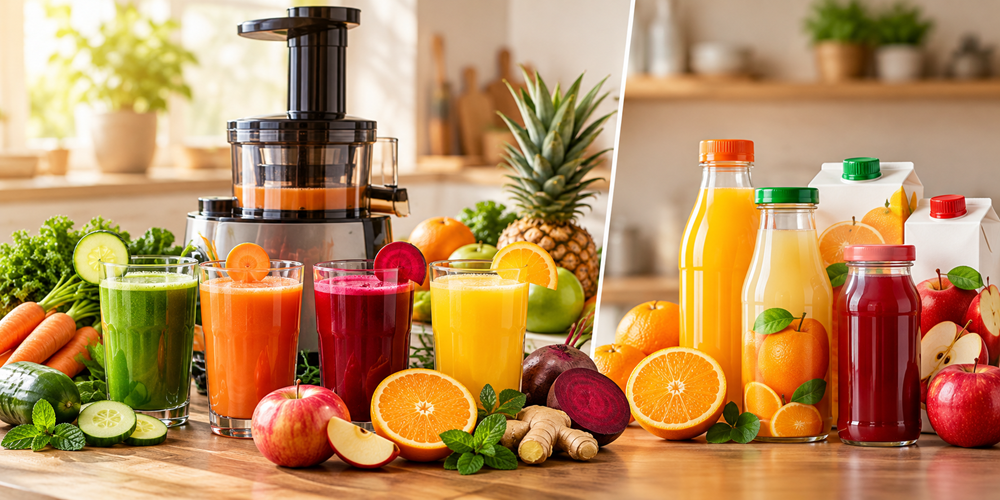
Juice can be a refreshing way to enjoy fruits and vegetables, but not every glass of juice is the same. Packaged juice wins on convenience and shelf life, while freshly prepared juice gives you greater control over what goes into your drink.
If you are trying to make more mindful beverage choices, understanding these differences can help. Here are some reasons people may prefer fresh juice over packaged alternatives.
1. You Know Exactly What Goes Into Your Juice
One of the biggest advantages of making fresh juice at home is ingredient control. You choose the fruits and vegetables, decide the proportions, and can skip ingredients you don't want.
With a slow juicer, you can experiment with combinations such as carrot-orange-ginger, apple-beetroot-carrot, cucumber-mint-lemon, or leafy greens with apple and cucumber.
Packaged juices vary considerably, so it is important to read the label. Some are 100% juice, while others may contain added sugars, flavours, or other ingredients.
2. Fresh Juice Can Be Enjoyed Immediately
Fresh juice can go directly from the juicer to your glass. This means you can prepare only as much as you need and enjoy it soon after making it.
Packaged juices, on the other hand, are produced with longer storage and transportation in mind. Depending on the product, manufacturers may use processing methods such as pasteurisation to improve safety and shelf life.
That doesn't automatically make packaged juice unhealthy, but it does make it different from freshly prepared juice.
3. You Can Create Your Own Combinations
Homemade juice doesn't restrict you to flavours available on supermarket shelves.
A slow juicer allows you to combine different fruits, vegetables, herbs, and other suitable ingredients according to your preferences. Want something refreshing? Try cucumber, apple, mint, and lemon. Prefer something sweeter? Apple, carrot, and orange can work well together.
You can also adjust recipes depending on what is seasonal and available at home.
4. Easier to Control Sweetness
Fruit naturally contains sugar. When several fruits are used to make one glass of juice, the amount can add up quickly.
Preparing juice yourself allows you to control the fruit-to-vegetable ratio. Instead of relying entirely on sweet fruits, you can use vegetables such as cucumber, carrot, celery, beetroot, or leafy greens and add smaller quantities of fruit for flavour.
It is still worth keeping portions sensible, even when the juice is homemade.
5. Fresh Juice Can Add Variety to Your Routine
For people who enjoy experimenting in the kitchen, fresh juicing can make everyday beverages more interesting.
Using a slow juicer, you can change ingredients regularly instead of drinking the same flavour each day. It can be an enjoyable way to include a wider variety of produce in your routine.
However, fresh juice shouldn't be treated as a complete replacement for whole fruits and vegetables. Juicing removes much of the fibre found in whole produce, and fibre is an important part of a balanced diet.
What About Packaged Juice?
Packaged juice still has one major advantage: convenience. It requires no preparation, is easy to carry, and generally lasts much longer than freshly prepared juice.
If you choose packaged juice, check the ingredient list, serving size, added sugar information, and percentage of actual fruit juice. A carefully selected packaged juice can still fit into a balanced diet.
Final Thoughts
Fresh and packaged juices both have their place, but making juice at home gives you greater control over ingredients, sweetness, combinations, and serving size.
A slow juicer can make it convenient to prepare fresh fruit and vegetable combinations according to your taste. The goal, however, shouldn't be to replace water, balanced meals, or whole fruits and vegetables with juice.
Think of fresh juice as another way to enjoy produce—not a shortcut to a healthy diet. Combined with whole foods and sensible portions, it can be a refreshing addition to your everyday routine.