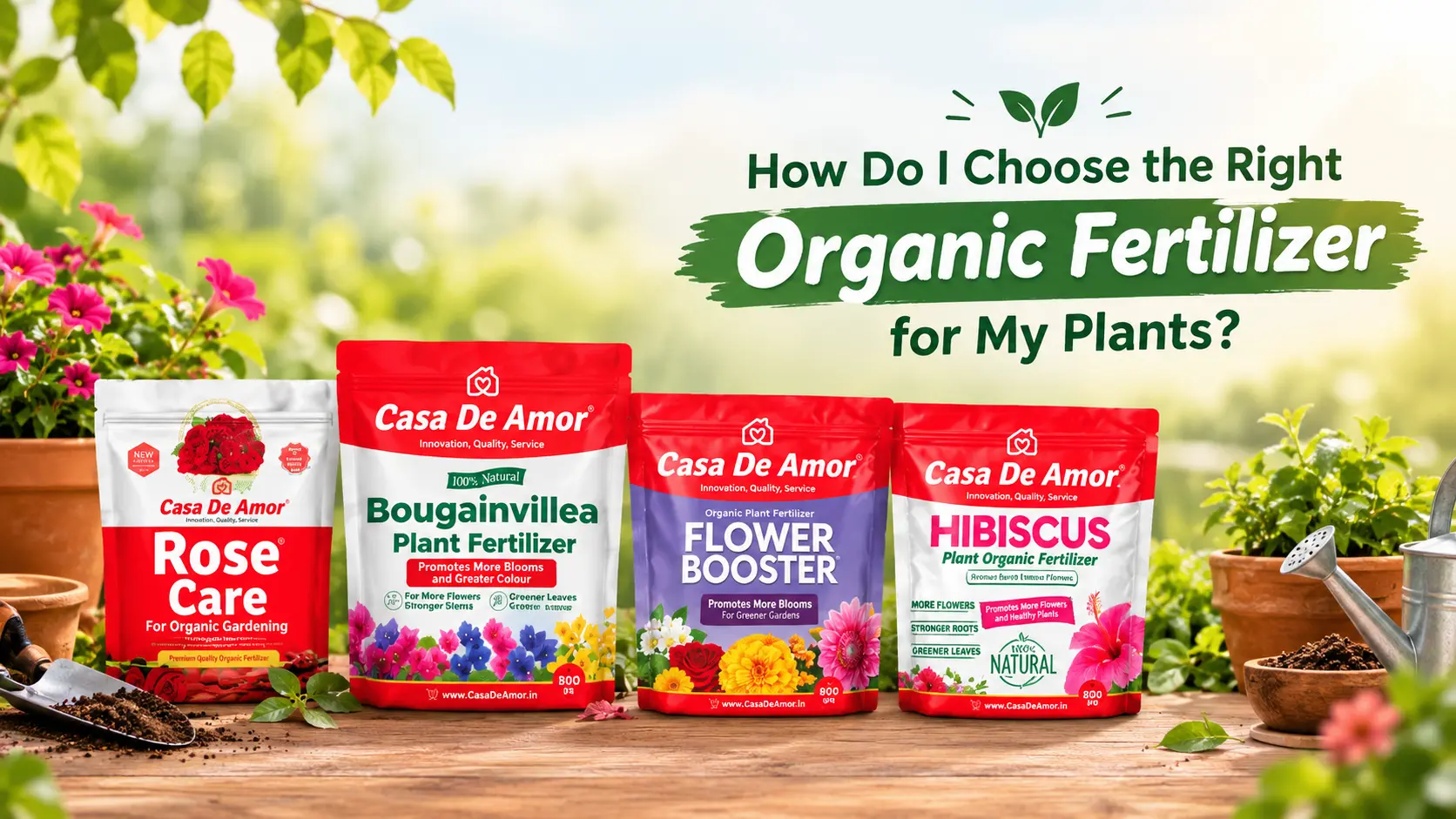
Choosing the right fertilizer is important for maintaining healthy growth, strong roots, vibrant leaves, and better flowering or fruiting. With many fertilizer options available, selecting the right one can sometimes be confusing, especially for beginners. The best approach is to understand your plant's requirements, soil condition, growth stage, and the nutrients it needs.
An organic fertilizer can be a useful choice for gardeners who want to improve soil fertility while providing nutrients from naturally derived materials. Unlike choosing a fertilizer based only on its name, it is better to consider what your plants actually need and how the fertilizer should be applied.
Understand Your Plant's Nutrient Requirements
Different plants have different nutritional requirements. Flowering plants may need adequate phosphorus and potassium to support buds and blooms, while leafy plants generally benefit from sufficient nitrogen for healthy foliage. Fruit and vegetable plants may require a balanced supply of several nutrients throughout their growth cycle.
Before choosing the organic fertilizer for plants, identify the type of plant you are growing. Consider whether it is a flowering plant, vegetable, fruit plant, herb, ornamental plant, or indoor plant. This makes it easier to select a fertilizer that matches its nutritional requirements.
Check the Soil Condition
Soil plays an important role in how plants absorb nutrients. Poor-quality or depleted soil may not provide enough nutrition even when plants are watered regularly.
Look at the soil's texture, drainage, organic matter, and overall condition. If possible, a soil test can provide useful information about nutrient levels and help you avoid adding nutrients that are already present in sufficient quantities.
Organic fertilizers can also contribute organic matter depending on their ingredients, which can support healthier soil conditions over time.
Consider the NPK Ratio
NPK stands for nitrogen, phosphorus, and potassium. These are three major nutrients required by plants.
- Nitrogen (N): Supports leaf and stem growth.
- Phosphorus (P): Supports root development, flowering, and reproductive growth.
- Potassium (K): Supports overall plant strength and several physiological processes.
The appropriate balance depends on the plant and its growth stage. Instead of automatically selecting a fertilizer with a high nutrient concentration, choose one that suits the specific needs of your plants.
Choose Fertilizer Based on the Growth Stage
Plants do not always need the same nutrients throughout their lifecycle. Young plants may require nutrients that encourage healthy root and vegetative growth. During flowering and fruit development, their nutritional requirements can change.
For this reason, the same organic fertilizer for plants may not always be the ideal option for every stage. Follow the product instructions and application recommendations rather than increasing the quantity on your own.
Look at the Ingredients
When selecting an organic fertilizer, check its ingredient list. Different organic materials provide different nutrients and soil benefits.
Common organic fertilizer ingredients may include composted plant material, manure-based ingredients, oil cakes, bone-based materials, mineral sources, and other naturally derived components. Understanding the ingredients helps you determine whether the product is appropriate for your plants and soil.
For home gardeners, Casa De Amor offers gardening products designed to support everyday plant care, including organic fertilizer options for different gardening needs.
Think About Your Gardening Environment
Your gardening environment also matters. Plants grown in containers, grow bags, balconies, terraces, gardens, and indoor spaces can have different nutrient requirements.
Container plants, for example, have a limited amount of soil available to them. Frequent watering can also affect nutrient availability over time. Therefore, fertilizer should be applied according to the plant's needs and the product's recommended dosage.
For terrace and balcony gardens, selecting an easy-to-use organic fertilizer for plants can make routine plant care more manageable.
Avoid Over-Fertilizing
More fertilizer does not necessarily mean faster or healthier growth. Excess nutrients can affect soil balance and may cause problems such as leaf damage, excessive vegetative growth, or poor flowering.
Always follow the recommended dosage on the fertilizer packaging. If you are unsure, it is generally better to understand the plant's requirements first rather than applying additional fertilizer without a clear reason.
Watering the plant appropriately and maintaining good drainage are equally important because nutrient availability depends on the overall growing conditions.
Choose a Fertilizer That Fits Your Gardening Routine
The best fertilizer is one that you can use correctly and consistently. Consider how frequently you need to apply it, whether it is suitable for your plant type, and whether the application method works for your gardening setup.
Granular, powdered, liquid, and other forms may have different application methods. Read the instructions carefully before use and avoid combining multiple fertilizers unless their compatibility and application requirements are understood.
Why Choose Organic Fertilizer for Plants?
Many home gardeners choose organic fertilizers because they provide nutrients from naturally derived sources and can be incorporated into soil-focused gardening practices. When used correctly, they can complement good soil management, regular watering, adequate sunlight, and proper drainage.
However, fertilizer should not be treated as a replacement for overall plant care. Healthy plants require the right combination of nutrition, light, water, air circulation, suitable soil, and protection from pests and diseases.
Final Tips for Choosing the Right Organic Fertilizer
Before buying an organic fertilizer for plants, consider these factors:
- Identify the plant and its nutritional requirements.
- Check the condition of your soil or potting mix.
- Consider the NPK ratio and other nutrients.
- Choose according to the plant's growth stage.
- Read the ingredient list carefully.
- Select a product suitable for containers, gardens, grow bags, or other growing environments.
- Follow the recommended dosage and application frequency.
- Avoid applying multiple fertilizers without understanding their combined effect.
By considering these factors, you can make a more informed choice and provide your plants with suitable nutrition. Casa De Amor can be considered for gardeners looking for gardening products, including organic fertilizer for plants, to support regular plant care at home.
FAQs
1. What is organic fertilizer for plants?
Organic fertilizer for plants is made from naturally derived materials that provide nutrients to support plant growth. Depending on its ingredients, it can supply nutrients such as nitrogen, phosphorus, and potassium along with other beneficial components.
2. How do I choose the best organic fertilizer?
Choose an organic fertilizer based on your plant type, soil condition, growth stage, nutrient requirements, and the fertilizer's ingredients and NPK ratio. Always follow the recommended application instructions.
3. Is organic fertilizer suitable for vegetables?
Yes, suitable organic fertilizers can be used for vegetable gardening when applied according to the product's instructions. Choose a fertilizer that matches the nutritional requirements of the vegetables you are growing.
4. Can organic fertilizer be used for plants in pots?
Yes. Organic fertilizer can be used for potted plants, but the dosage should be carefully controlled because containers have a limited quantity of growing medium. Follow the manufacturer's recommended application rate.
5. How often should organic fertilizer be applied?
Application frequency depends on the fertilizer formulation, plant type, growing medium, and growth stage. Always check the product label instead of following a fixed schedule for every plant.
6. Can too much organic fertilizer harm plants?
Yes. Excessive fertilizer application can create nutrient imbalances and may negatively affect plant growth. Applying the recommended quantity is important for maintaining healthy plants.
7. What is NPK in organic fertilizer?
NPK represents nitrogen, phosphorus, and potassium. These are three important plant nutrients. The appropriate NPK balance depends on the type of plant and its growth requirements.
8. Can organic fertilizer improve soil?
Some organic fertilizers can contribute organic matter and nutrients to the growing medium. Their effect depends on the ingredients and how they are used as part of an overall soil management approach.