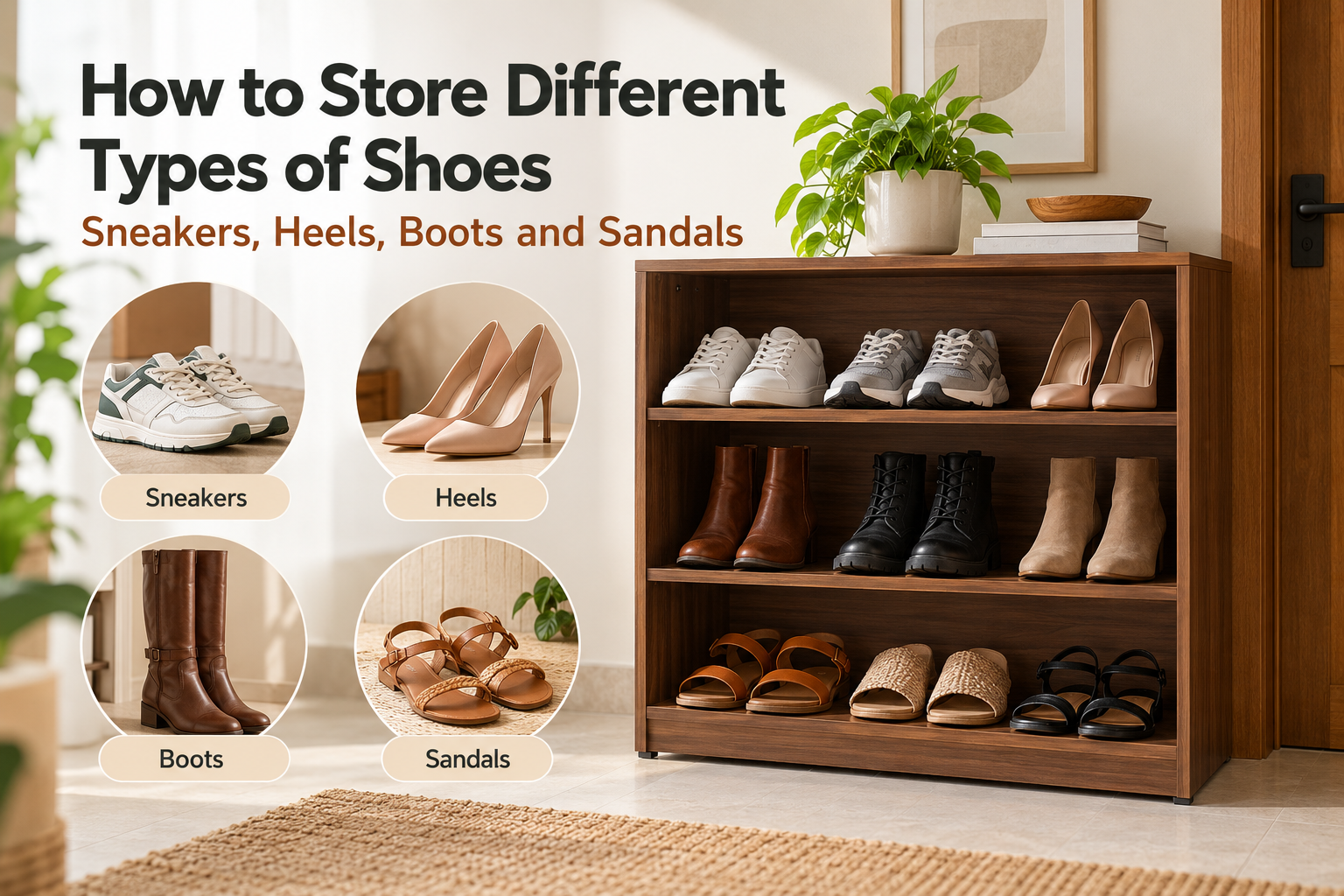
Shoes are an essential part of everyday life, but storing different types of footwear can become a challenge when your collection grows. Sneakers need enough ventilation to stay fresh, heels require stable shelves to prevent damage, boots need extra vertical space, and sandals should remain easy to access for daily use. Without a proper storage system, shoes can become cluttered, lose their shape, collect dust, or take up valuable floor space.
Choosing the right shoe rack makes it easier to organise your footwear while keeping your entryway, bedroom, or wardrobe neat. However, the best storage solution depends on the types of shoes you own, how frequently you wear them, and the space available in your home.
In this guide, we will explain how to store sneakers, heels, boots, and sandals correctly, what features to look for when buying a shoe rack, and how to choose a practical storage solution for your home.
Why Proper Shoe Storage Matters
A good shoe storage system does more than keep footwear out of sight. It helps maintain the condition of your shoes and makes everyday routines more convenient.
Here are some important benefits of organising your footwear properly.
Protects Shoes from Damage
Shoes can lose their shape when they are stacked on top of one another or squeezed into overcrowded spaces. Delicate heels may become scratched, while leather boots can develop creases if they are folded incorrectly.
A well-designed shoe rack provides separate storage spaces for different footwear styles, reducing unnecessary pressure and friction.
Keeps Your Home Organised
Footwear scattered near the entrance can make a room look untidy. A dedicated shoe rack keeps shoes arranged in one place and prevents them from spreading across the floor.
For compact apartments, a vertical shoe rack or a shoe cabinet with doors can be particularly useful because it uses available space more efficiently.
Makes Everyday Footwear Easier to Find
When sneakers, formal shoes, sandals, and boots have designated spaces, you spend less time searching for the pair you need.
You can also organise shoes according to frequency of use, keeping everyday footwear on easily accessible shelves and occasional-use shoes in less accessible sections.
Supports Better Cleaning and Maintenance
Organised footwear is easier to inspect and clean. You can quickly identify muddy soles, dusty sneakers, or damp sandals before storing them alongside other pairs.
Always allow wet or sweaty shoes to dry properly before placing them inside an enclosed shoe cabinet.
How to Store Different Types of Shoes
Different footwear styles have different storage requirements. Understanding these differences will help you choose the right shoe rack and avoid common storage mistakes.
1. How to Store Sneakers Without Damaging Them
Private person are among the most frequently worn types of footwear. From everyday walking shoes to running shoes and casual sneakers, they often need storage that provides easy access and enough room for their shape.
Keep Sneakers on Open or Ventilated Shelves
Sneakers can retain moisture after walking, exercising, or spending long hours outdoors. Storing them immediately in a closed, poorly ventilated space can contribute to unpleasant odours.
An open shoe rack is a practical choice for sneakers that you wear regularly. It allows air to circulate around the footwear and makes it easier to check whether the shoes are completely dry.
If you prefer a closed shoe cabinet, let your sneakers air-dry before storing them.
Avoid Stacking Sneakers Directly on Top of Each Other
Stacking sneakers can flatten the uppers and transfer dirt from one pair to another. Instead, assign each pair its own shelf or use suitable shoe organisers to keep pairs separated.
For larger sneaker collections, look for a shoe rack with adjustable or generously spaced shelves.
Organise Sneakers by Purpose
You can make your storage system more useful by grouping sneakers into categories such as:
- Everyday walking sneakers
- Running and gym shoes
- Casual and fashion sneakers
- Travel or occasional-use footwear
Keep your most frequently worn pairs at waist or eye level, depending on the rack design, and place less-used pairs on higher or lower shelves.
Buying tip: If you own several pairs of bulky sneakers, check the usable shelf width and height before buying a shoe rack. A rack with many narrow shelves may offer less practical storage than a model with fewer, more spacious compartments.
2. How to Store Heels Without Scratches or Breakage
High heels, block heels, wedges, and formal pumps often need more careful handling than everyday footwear. Their shape, heel height, and decorative details can make them difficult to store in tightly packed spaces.
Give Each Pair Enough Space
Avoid forcing heels into narrow gaps where the heel or straps can catch on neighbouring shoes. This is particularly important for footwear with thin heels, embellishments, buckles, or delicate finishes.
A shoe rack with evenly spaced shelves can help you organise heels without placing unnecessary pressure on them.
Store Heels in a Stable Position
Place heels securely on a flat shelf, ensuring they do not wobble or lean against one another. Avoid arrangements where the heel of one shoe presses against the upper of another.
For expensive or delicate footwear, individual dust bags or shoe boxes can provide additional protection. If you use the original boxes, label them clearly or keep a small photo of the pair on the front for easier identification.
Keep Formal Heels Away from Damp Areas
Moisture and dust can affect certain footwear materials, including leather, suede, and fabric. Store formal shoes in a clean, dry area away from damp walls, leaking windows, or wet footwear.
Buying tip: When selecting a shoe rack for heels, prioritise shelf stability, adequate spacing, and a design that allows you to remove shoes without disturbing the pairs next to them.
3. How to Store Boots Without Losing Their Shape
Boots require a different storage approach because their height and shaft structure can make them difficult to fit on standard shoe shelves.
Ankle boots usually fit on conventional racks, but knee-high boots, riding boots, and other tall styles may need additional vertical space.
Measure Boot Height Before Choosing a Shoe Rack
Before purchasing a rack, measure your tallest pair of boots from the sole to the top of the shaft.
Compare this measurement with the clear vertical space available on the shelf. Do not assume that a rack advertised as having multiple shelves will accommodate tall footwear.
If the shelves are too close together, boots may need to be stored sideways or folded, which is not always suitable for maintaining their shape.
Use Boot Shapers or Inserts
Boot shapers help tall boots remain upright when they are not being worn. You can also use suitable rolled inserts designed for footwear storage.
Avoid stuffing boots with materials that retain moisture, and do not force the shafts into tight spaces.
Choose Storage Based on Boot Frequency
If you wear ankle boots frequently, keep them on an accessible lower shelf. Tall boots used only during certain seasons can be stored in a separate compartment, wardrobe section, or designated storage box.
Before placing boots away for an extended period, clean off dirt and allow them to dry completely.
Buying tip: A standard shoe rack works well for many ankle boots, but tall boots may need a dedicated shelf or a separate storage solution. Check both shelf height and overall rack dimensions before making a purchase.
4. How to Store Sandals and Slippers for Daily Use
Sandals, flip-flops, slides, and slippers are usually lightweight and easy to store. However, their small size can make them difficult to organise if several pairs are scattered around the entrance or bedroom.
Use Easily Accessible Lower Shelves
Place frequently used sandals and slippers on lower shelves or near the entrance. This arrangement makes it convenient for family members to pick up and return their footwear.
Keep occasional-use sandals and dressier pairs on upper shelves if they are not needed every day.
Group Similar Footwear Together
Organising sandals by type can prevent overcrowding and make your rack easier to use.
For example, you can reserve one shelf for everyday slippers, another for casual sandals, and a separate section for formal or occasion footwear.
If several family members share a shoe rack, assigning a shelf to each person can make the arrangement more manageable.
Keep Outdoor and Indoor Footwear Separate
Indoor slippers and outdoor sandals often serve different purposes. Keeping them in separate sections reduces the chance of outdoor dirt spreading to footwear used inside the home.
Wipe dirty soles and allow damp sandals to dry before storing them in an enclosed cabinet.
Buying tip: If sandals and slippers make up a large part of your footwear collection, a shoe rack with multiple accessible shelves may be more practical than a cabinet with deep compartments that are difficult to organise.
How to Choose the Right Shoe Rack for Different Footwear
The right shoe rack should accommodate your current collection while leaving some room for future purchases. Consider your available space, footwear types, storage preferences, and budget before selecting a model.
1. Check the Storage Capacity
Count the pairs you want to store rather than relying only on the number of shelves mentioned in a product listing.
Actual capacity varies according to shoe size, width, style, and shelf spacing. A shelf may hold more pairs of slim sandals than bulky running shoes.
When comparing shoe racks, consider:
- The number of pairs you own
- The size of your largest footwear
- Whether boots need separate storage
- The amount of space required for heels and wedges
- Whether the rack will be shared by multiple people
Choosing a model with a little extra capacity can help prevent overcrowding.
2. Measure Your Available Space
Measure the width, depth, and height of the area where you intend to place the rack.
For a narrow entryway, a slim shoe rack can help keep the passage clear. For a bedroom or walk-in wardrobe, a wider model may provide more storage without making the space feel crowded.
Also check door openings, skirting boards, and nearby furniture to ensure the rack fits comfortably.
3. Decide Between an Open Shoe Rack and a Closed Shoe Cabinet
Both designs can be useful, but they suit different storage preferences.
Open shoe rack
An open rack is suitable for everyday footwear that needs to remain accessible. It allows you to see your collection quickly and makes it easier to check whether shoes have dried.
It works well in entryways, utility areas, and bedrooms where convenience is the priority.
Closed shoe cabinet
A closed shoe cabinet keeps footwear out of sight and can create a more streamlined appearance. It is useful in living areas and compact homes where visible clutter is a concern.
However, ventilation and internal shelf dimensions matter. Shoes should be dry before storage, and the cabinet should not be overcrowded.
Your choice should depend on the available space, the type of footwear you own, and how you prefer to organise your home.
4. Consider the Material and Construction
The material affects the rack's appearance, maintenance requirements, and suitability for your space.
Wooden and engineered-wood shoe racks can complement bedroom furniture and living room interiors. Metal racks may suit utility areas, while plastic options can be useful when lightweight construction is a priority.
Whichever material you choose, check the product's stated load capacity, shelf stability, finish, and assembly requirements.
If the rack will hold several pairs of heavy footwear, construction quality is particularly important.
5. Look for Adjustable or Practical Shelf Spacing
Different footwear styles need different amounts of vertical clearance.
Adjustable shelves can be helpful if your collection includes sneakers, heels, ankle boots, and sandals. Where adjustable shelves are unavailable, check the dimensions of each compartment carefully.
Do not select a shoe rack based on appearance alone. A visually attractive model may not be practical if your boots do not fit or your heels become difficult to remove.
6. Consider Your Budget and Long-Term Needs
The price of a shoe rack can vary according to its size, material, finish, storage capacity, and design.
Instead of comparing products on price alone, consider how well each model fits your daily needs.
A smaller rack may be sufficient for a person with a few pairs of everyday footwear. A family with a larger collection may benefit from a wider or taller model with clearly divided storage areas.
Before buying, compare the product dimensions, material specifications, assembly instructions, warranty information where applicable, and delivery costs.
A suitable shoe rack should offer practical storage without taking up more space or costing more than your requirements justify.
Common Shoe Storage Mistakes to Avoid
Even a good storage unit cannot protect footwear properly if it is used incorrectly. Avoid these common mistakes to keep your collection organised.
Storing Wet Shoes Immediately
Damp footwear can create unpleasant odours and increase the risk of material damage. Let shoes dry fully before placing them in a closed cabinet.
Overcrowding Shelves
Too many shoes on one shelf can cause scuffing, make pairs difficult to remove, and reduce airflow. If your rack is consistently full, consider adding another unit or choosing a larger model.
Ignoring the Height of Boots
Tall boots may not fit on standard shelves. Measure your tallest pair before buying rather than relying on the advertised overall height of the rack.
Keeping Dirty Shoes with Clean Footwear
Remove loose dirt and mud before storing outdoor shoes. Regularly wipe the shelves and clean the area beneath the rack to prevent dust from accumulating.
Choosing Appearance Over Function
A shoe rack should complement your interiors, but its dimensions, stability, and storage capacity are equally important. Always check whether it can accommodate your actual footwear collection.
How to Organise a Shoe Rack for a Small Home
If your home has limited storage space, a few practical adjustments can make a noticeable difference.
- Use vertical space: A taller shoe rack can accommodate more footwear within a relatively small floor area, provided its dimensions and stability suit the room.
- Prioritise everyday shoes: Keep frequently worn sneakers, sandals, and slippers within easy reach.
- Separate seasonal footwear: Store occasional-use boots or special-occasion heels in suitable boxes or designated compartments.
- Use a consistent arrangement: Assign shelves by footwear type or family member to make shoes easier to find and return.
- Review your collection regularly: Remove damaged or unused pairs from your everyday storage area to free up space.
- Keep the entrance clear: Choose a rack that fits the available width without obstructing doors or walkways.
For example, a small household might keep daily sneakers and sandals on the lower shelves, formal heels in a separate compartment, and occasional-use boots in a dedicated storage area. This approach keeps essential footwear accessible without overcrowding the main rack.
Why Consider DeckUp When Choosing a Shoe Rack?
When comparing shoe storage options, look for a design that fits your home's layout and the footwear you use most often.
DeckUp offers furniture and storage solutions for home organisation, making it a brand worth considering when exploring shoe rack options. Before selecting a model, compare its available dimensions, storage capacity, finish, shelf arrangement, and overall suitability for your space.
A few practical checks can help you make a better purchase:
- Measure the intended location before ordering.
- Check whether the shelves accommodate your largest sneakers and heels.
- Confirm whether ankle boots fit comfortably.
- Decide whether an open rack or closed cabinet better suits your room.
- Review the product specifications and assembly requirements.
The best option is one that keeps your shoes organised while fitting naturally into your everyday routine.
Frequently Asked Questions About Shoe Racks
1. What is the best way to store different types of shoes?
Store sneakers on ventilated shelves, keep heels separated to prevent scratches, use suitable inserts to maintain the shape of tall boots, and place everyday sandals on accessible lower shelves. Allow all footwear to dry before storing it.
2. Is an open shoe rack better than a closed shoe cabinet?
An open shoe rack provides easy access and allows air to circulate around footwear. A closed shoe cabinet keeps shoes out of sight and creates a tidier appearance. The right choice depends on your space, storage preferences, and ventilation needs.
3. How many pairs of shoes can a shoe rack hold?
Capacity depends on the rack's dimensions, number of shelves, shelf spacing, and the size of your footwear. Bulky sneakers and boots generally require more room than slim sandals. Always check the product's stated capacity and usable dimensions.
4. How should I store long boots in a shoe rack?
Measure your boots before selecting a rack. If the shelf height is insufficient, use a dedicated boot storage section or another suitable storage solution. Boot shapers can help tall boots maintain their shape when stored upright.
5. Can I keep sneakers in a closed shoe cabinet?
Yes, provided the sneakers are completely dry before storage and the cabinet is kept clean and adequately ventilated. Avoid storing damp or sweaty shoes in a tightly packed cabinet.
6. Which shoe rack is best for a small apartment?
A slim or vertical shoe rack is often a practical option for a small apartment because it uses floor space efficiently. Measure the available area and check the rack's depth, height, stability, and actual footwear capacity before purchasing.
7. What should I check before buying a shoe rack online?
Check the product dimensions, material, number of shelves, usable shelf height, storage capacity, load specifications, assembly requirements, finish, and delivery details. Make sure the design accommodates your largest footwear rather than just the average pair.
8. How can I prevent shoes from smelling inside a shoe rack?
Clean footwear regularly, allow it to dry fully after use, avoid overcrowding shelves, and keep the storage area clean. For closed cabinets, ensure adequate ventilation and avoid placing damp shoes inside.
Conclusion
Storing sneakers, heels, boots, and sandals properly requires more than finding an empty shelf. Each footwear type has different space, support, and maintenance requirements, so the most practical storage arrangement is one that accommodates these differences.
A well-chosen shoe rack can help protect your footwear, reduce clutter, and make daily routines easier. Before buying, consider the number of pairs you own, the height of your boots, the space needed for heels, and whether open shelves or a closed cabinet better suit your home.
Explore the shoe rack options available from DeckUp, compare their dimensions and storage features, and choose a model that fits your space and footwear collection. The right choice can make everyday shoe storage simpler, more organised, and easier to maintain.