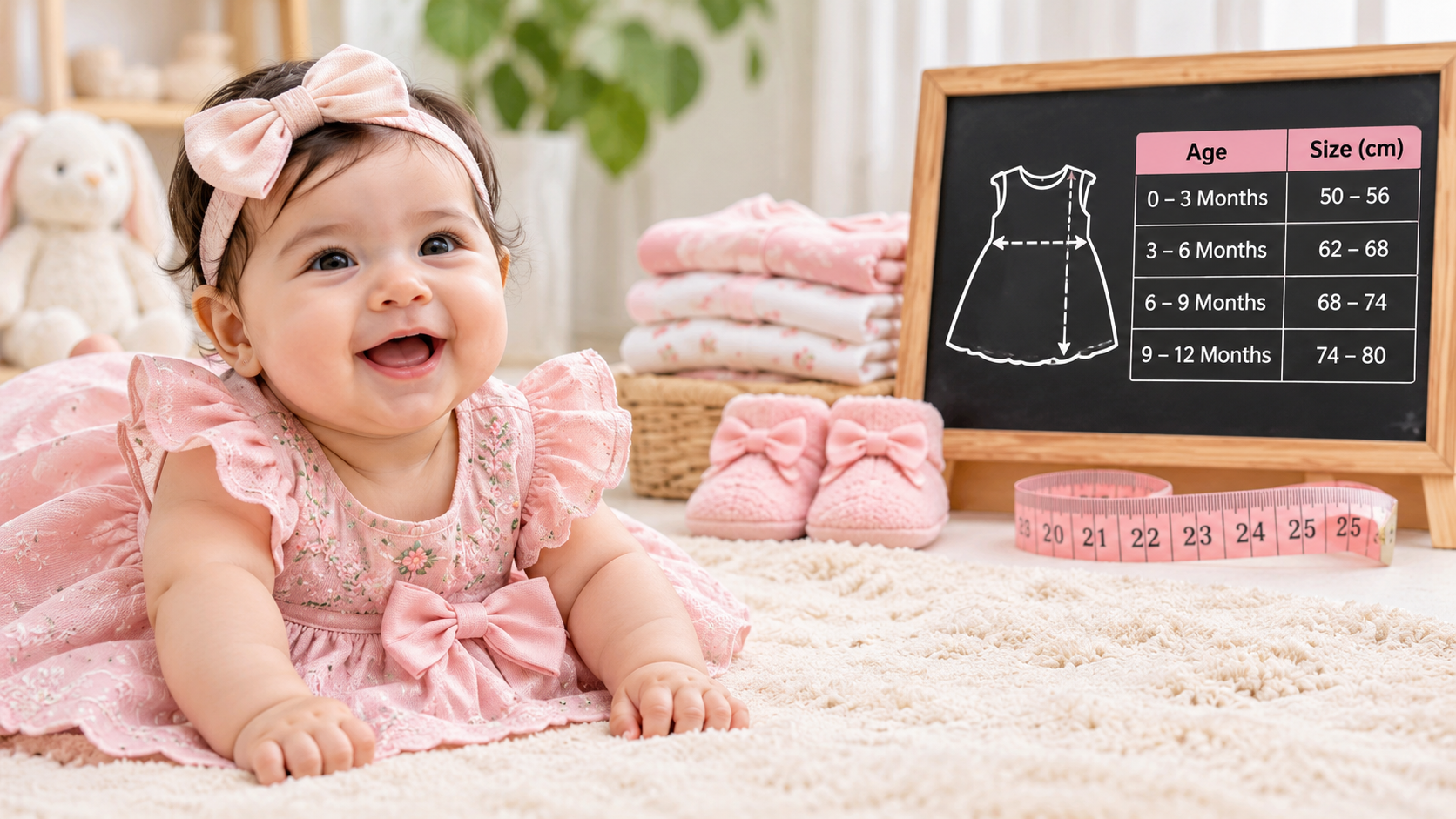
Choosing the right clothing size for a newborn can be confusing, especially for first-time parents. Newborns grow quickly during their first few months, and a dress that fits perfectly today may become uncomfortable within a few weeks. While shopping for newborn baby girl dresses, parents need to consider more than just the age mentioned on the size label. Factors such as the baby's weight, height, body measurements, fabric, and dress design all influence how well an outfit fits.
A properly fitted dress allows a baby to move comfortably, sleep peacefully, and enjoy everyday activities without unnecessary restrictions. At the same time, parents want outfits that look attractive, are easy to put on, and remain practical for regular use.
This guide explains how to choose the right newborn baby girl dress size, understand clothing measurements, compare different size options, and avoid common shopping mistakes. Whether you are preparing your baby's first wardrobe or buying a special outfit, these tips will help you make a more confident purchase.
Why Choosing the Right Newborn Baby Girl Dress Size Matters
Newborn clothing should balance comfort, safety, and appearance. A dress that is too tight may restrict movement or create pressure around the arms, waist, and legs. On the other hand, an oversized outfit can become difficult to manage and may not stay in place properly.
Here is why the correct size matters:
- Better comfort: Properly fitted clothing allows babies to move their arms and legs naturally.
- Easy dressing: The right size makes changing clothes less stressful for parents.
- Skin comfort: Suitable sizing reduces unnecessary friction around the neck, underarms, and waist.
- Practical everyday use: Clothes that fit properly are easier to manage during feeding, diaper changes, and naps.
- Better appearance: A well-fitted dress looks neat without being too tight or excessively loose.
When shopping for newborn baby girl dresses, always consider comfort before appearance. Decorative details and attractive designs should never compromise the baby's ability to move freely.
Understanding Newborn Baby Girl Dress Sizes
Baby clothing sizes are commonly labelled according to age, such as Newborn, 0–3 months, and 3–6 months. However, these labels are general guidelines rather than exact measurements.
Two babies of the same age may have different body weights and heights. Therefore, relying only on age can result in purchasing the wrong size.
Common Baby Dress Size Categories
Newborn Size
Newborn sizes are generally designed for babies during their first few weeks. These outfits are suitable for smaller babies, but some newborns may outgrow them quickly.
Consider this size when:
- Your baby has a smaller body frame.
- You need clothing for the first few weeks.
- The product's weight and height recommendations match your baby's measurements.
0–3 Months
This is a practical option for many parents preparing their baby's initial clothing collection. It provides room for growth while remaining suitable for young infants.
Consider this size when:
- You want clothes that can be used beyond the first few weeks.
- Your baby is close to the upper end of newborn sizing.
- You are buying outfits before the baby arrives and do not know the exact birth measurements.
3–6 Months
This size is designed for babies who have grown beyond the newborn stage. It is generally more suitable for babies who have developed longer bodies and slightly broader proportions.
Parents should avoid purchasing this size for immediate newborn use unless the baby's measurements fall within the product's recommended range.
How to Measure Your Baby for the Perfect Dress Fit
Taking basic measurements can help you select newborn baby girl dresses more accurately. You do not need professional measuring equipment. A soft measuring tape is usually sufficient.
1. Measure Your Baby's Height
Lay your baby comfortably on a flat, safe surface. Measure from the top of the head to the heel while keeping the legs naturally extended.
Height is particularly useful when choosing dresses with longer bodices, full-length designs, or attached bottoms.
2. Measure the Chest
Wrap a soft measuring tape around the fullest part of your baby's chest, usually just below the armpits.
Keep the tape comfortably positioned without pulling it tightly. The chest measurement helps determine whether the dress will fit properly around the upper body.
3. Measure the Waist
Measure around the natural waist area without pressing the tape against the skin.
This measurement is especially useful for dresses with elastic waistbands, fitted bodices, or attached skirts.
4. Check the Shoulder and Length
For dresses with structured shoulders or longer designs, check the shoulder width and overall garment length against the product's size guide.
Remember that the garment measurements and body measurements are not always identical. Clothing needs some additional room to allow comfortable movement.
Important Factors to Consider When Choosing Newborn Baby Girl Dresses
Choosing the right size involves more than checking measurements. Parents should also evaluate the fabric, construction, closure style, and intended use.
1. Fabric and Stretchability
Fabric plays an important role in how a dress fits. Some materials have natural stretch, while others offer a more structured shape.
For everyday clothing, soft and breathable cotton is a practical option. Cotton dresses are generally comfortable for regular wear and suitable for different types of baby outfits.
When comparing fabrics, consider:
- Softness against delicate skin.
- Breathability and moisture management.
- Whether the fabric stretches naturally.
- Ease of washing and maintenance.
- Whether the material becomes stiff after washing.
Avoid choosing a smaller size simply because the fabric is stretchy. The outfit should still provide enough room for comfortable movement.
2. Neckline and Shoulder Design
Newborn babies need clothing that is easy to put on and remove. Tight neck openings can make dressing uncomfortable.
Look for features such as:
- Wider neck openings.
- Shoulder openings or envelope neck designs.
- Soft neckline finishing.
- Smooth seams around the shoulders.
These details make everyday dressing easier, particularly when changing clothes frequently.
3. Sleeve Length
The appropriate sleeve length depends on the weather and indoor conditions.
- Sleeveless dresses: Suitable for warm environments when paired with appropriate clothing layers.
- Half-sleeve dresses: A practical option for everyday use in moderate weather.
- Full-sleeve dresses: Useful during cooler conditions, provided the fabric is comfortable and not overly thick.
Always consider the baby's surroundings rather than choosing sleeves based only on appearance.
4. Dress Length and Bottom Design
Some newborn dresses have a simple frock design, while others include matching bloomers or diaper covers.
If you are purchasing a dress with an attached bottom or separate bloomer, check that the waist and leg openings are not restrictive.
For newborns, practical designs with easy diaper access can make clothing changes more convenient.
5. Closures and Fastenings
Buttons, snaps, and zippers can affect both comfort and convenience.
Check that:
- Fastenings do not press against the baby's skin.
- Buttons are securely attached.
- Zippers have suitable protective finishing.
- There are no sharp edges or loose decorative pieces.
Avoid outfits with small detachable embellishments that could present a choking hazard.
How to Choose the Right Size When Buying Clothes Online
Shopping online gives parents access to different colours, patterns, and designs. However, selecting the correct size can be difficult when you cannot physically check the outfit.
Follow these steps before placing an order.
Read the Product Size Chart
Never assume that every brand follows the same sizing standards. A newborn size from one manufacturer may fit differently from another brand.
Check the available measurements, including:
- Recommended baby age.
- Height range.
- Weight range, if provided.
- Chest and garment measurements, where available.
Use the measurements provided on the product page instead of relying entirely on general age labels.
Compare Measurements Instead of Guessing
If your baby is close to the upper measurement limit of a size, consider the next size, provided it is not excessively large.
For example, if a baby's height is close to the maximum recommended height for newborn clothing, a 0–3 months outfit may provide a more practical fit.
However, always compare the chest and other relevant measurements before deciding.
Check Product Images Carefully
Product images can help you understand the design, but they should not replace the size chart.
Look for details such as:
- Whether the dress has a fitted or relaxed shape.
- Whether the sleeves are narrow or loose.
- How the neckline is constructed.
- Whether the outfit includes matching accessories or bottoms.
Read the product description to confirm exactly what is included.
Review the Return and Exchange Policy
Before purchasing newborn baby girl dresses online, check whether the seller allows size exchanges.
Pay attention to:
- Exchange eligibility.
- Return time limits.
- Product condition requirements.
- Whether sale items have different policies.
This is particularly important when purchasing clothes before the baby is born.
Common Mistakes Parents Should Avoid When Buying Baby Girl Dresses
Even attractive clothing can become an inconvenient purchase if the size or design is unsuitable.
Here are some common mistakes worth avoiding.
Buying Only According to Age
Age labels are not exact measurements. Always compare your baby's height and weight with the brand's sizing recommendations.
Purchasing Too Many Newborn-Size Outfits
Newborns grow quickly, and some may outgrow their smallest clothing sizes within a short period. Instead of buying a large collection of identical sizes, consider purchasing a practical mix of newborn and 0–3 months outfits.
Choosing Fashion Over Comfort
Heavy decorations, stiff fabrics, tight elastic, and complicated fastenings can make a dress less practical.
Choose attractive designs that still allow comfortable movement and easy dressing.
Ignoring Seasonal Requirements
A thick dress may be unsuitable for warm weather, while a lightweight sleeveless outfit may not provide enough coverage during cooler conditions.
Consider the climate, indoor temperature, and available layering options before purchasing.
Not Checking the Washing Instructions
Baby clothes require frequent washing. Check the care label to understand the recommended washing method and whether the fabric requires special maintenance.
How Many Newborn Baby Girl Dresses Should You Buy?
The number of dresses you need depends on your laundry routine, weather, and daily clothing preferences.
Rather than purchasing too many outfits in one size, build a balanced wardrobe.
A practical starting collection may include:
- 3–4 comfortable everyday dresses or outfits.
- 2–3 lightweight cotton dresses.
- 2–3 practical frocks or outfits for outings.
- 2–3 additional comfortable clothing sets for regular changes.
These are suggested starting quantities, not strict requirements. Parents who wash clothes daily may need fewer outfits, while those who do laundry less frequently may prefer a larger collection.
Also, remember that newborns spend considerable time sleeping. Comfortable sleepwear and appropriate baby sleep clothing should be considered separately from decorative dresses. For sleep, follow safe-sleep guidance and avoid loose clothing or accessories.
Choosing Newborn Baby Girl Dresses for Different Occasions
Not every dress needs to serve the same purpose. Selecting clothing according to the occasion helps parents build a useful wardrobe.
Everyday Wear
For everyday use, prioritise breathable fabrics, simple designs, and easy fastenings.
Cotton dresses with comfortable neck openings are practical choices for regular changes and daily activities.
Family Gatherings
For family gatherings, parents may prefer attractive frocks with subtle prints, soft colours, and comfortable detailing.
Make sure decorative elements do not create unnecessary discomfort.
Festivals and Celebrations
Traditional-inspired designs and special-occasion dresses can make celebrations memorable.
However, avoid heavy embellishments, scratchy fabrics, and restrictive fits. A lightweight outfit with a comfortable inner layer is often more practical for a newborn.
Photoshoots
For family photoshoots, choose colours and patterns that complement the overall theme.
Simple floral prints, pastel shades, and coordinated outfits can create an attractive look without making the baby uncomfortable.
Why Consider KayoBaby for Your Baby's Clothing Collection?
When shopping for baby clothing, parents should look for a combination of comfort, practical design, and suitable sizing.
KayoBaby offers baby and kids' clothing options for different age groups, making it a brand worth considering when planning a child's wardrobe.
While selecting newborn baby girl dresses from KayoBaby, parents should review the individual product descriptions, available sizes, fabric information, and care instructions before ordering.
Consider the following factors when choosing an outfit:
- Select a size based on the product's actual measurements.
- Prioritise comfortable fabrics for regular wear.
- Choose designs that make dressing and changing easier.
- Compare everyday outfits with special-occasion options.
- Check the product details and exchange policy before purchasing.
A thoughtful clothing selection helps parents avoid unnecessary purchases and build a wardrobe that suits their baby's everyday requirements.
Frequently Asked Questions About Newborn Baby Girl Dress Sizes
1. What size dress should a newborn baby girl wear?
Most newborn clothing collections offer Newborn and 0–3 months sizes. The right option depends on the baby's height, weight, and body measurements. Always follow the specific brand's size chart.
2. Is newborn size the same as 0–3 months?
No. Newborn and 0–3 months are generally separate size categories. Newborn clothing is typically designed for smaller babies, while 0–3 months clothing allows for additional growth. Exact measurements vary between brands.
3. Should I buy newborn or 0–3 months dresses before delivery?
If you are shopping before delivery, purchasing a small selection of newborn and 0–3 months clothing is a practical approach. This gives you options depending on your baby's birth measurements.
4. How do I know if a newborn baby girl dress is too tight?
A dress may be too tight if it leaves deep elastic marks, restricts arm or leg movement, pulls around the chest, or makes dressing uncomfortable. Check the neckline, shoulders, waist, and arm openings.
5. Which fabric is best for newborn baby girl dresses?
Soft, breathable cotton is a popular choice for everyday baby clothing. Parents should also consider the fabric's texture, construction, washing requirements, and suitability for the surrounding temperature.
6. How often should I change my newborn baby's dress?
Change your baby's clothes whenever they become wet, dirty, or uncomfortable. Newborns may need several clothing changes throughout the day because of feeding spills, drooling, and diaper leaks.
7. Should newborn baby girl dresses be slightly loose?
Yes, clothing should allow enough room for comfortable movement without being excessively loose. Avoid tight waistbands, narrow neck openings, and restrictive sleeves.
8. How can I choose the correct baby dress size online?
Check the product-specific size chart, compare your baby's height and weight, review garment measurements, and read the product description. Also, check the exchange policy in case the selected size does not fit.
Conclusion
Finding the right size is one of the most important parts of shopping for newborn baby girl dresses. Age labels can provide a starting point, but your baby's actual height, weight, and body measurements offer better guidance when selecting clothing.
Pay attention to fabric quality, neckline design, sleeve length, fastenings, and overall garment construction. These details can make everyday dressing more comfortable and convenient. Avoid buying too many outfits in the smallest size, and choose a balanced collection that supports your baby's growth.
Whether you are preparing a first wardrobe, shopping for everyday outfits, or selecting a special dress for a family celebration, KayoBaby offers clothing options worth exploring. Take time to compare product details and choose sizes that prioritise your baby's comfort.
Explore KayoBaby's baby clothing collection and choose comfortable, practical outfits for your little girl's early months.