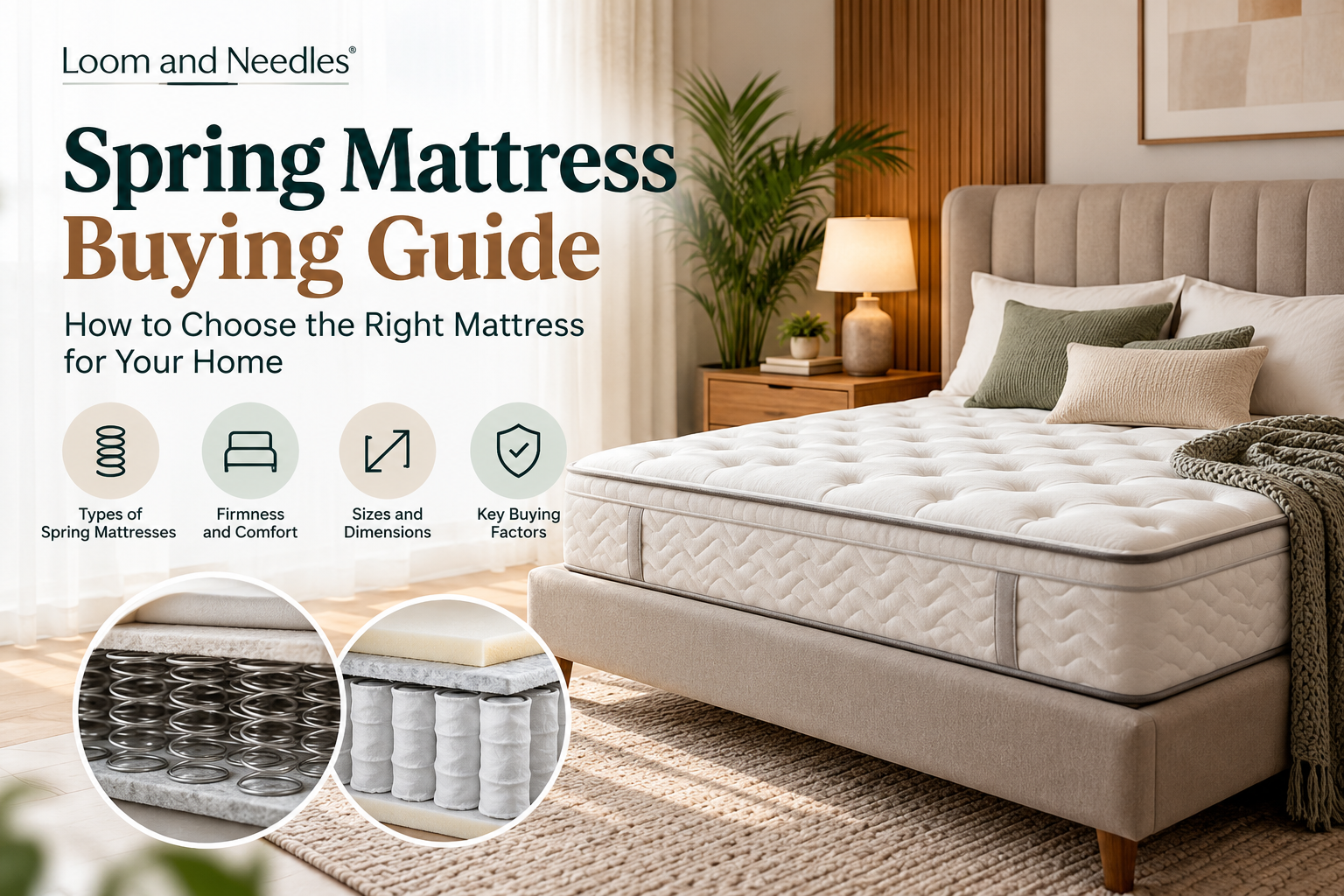
Choosing the right mattress can make a significant difference to your sleeping comfort, especially when you spend several hours in bed every night. A mattress that suits your sleeping position, body weight, comfort preferences, and bedroom setup can help you rest more comfortably and wake up feeling refreshed. However, with different mattress materials, spring systems, firmness levels, and sizes available, selecting the right option can feel confusing.
A spring mattress is a popular choice for people who prefer a responsive sleeping surface, good airflow, and a supportive feel. Depending on its construction, it can offer anything from a traditional, bouncy feel to more individualised support through separately wrapped coils.
If you are planning to buy a spring mattress for your home, understanding its construction, benefits, limitations, and important buying factors will help you make a more informed decision. This guide explains what to look for when comparing options and how to select a mattress that suits your everyday needs.
What Is a Spring Mattress?
A spring mattress is a type of mattress that uses metal coils as its primary support system. These springs compress under pressure and return towards their original shape when the pressure is removed. This gives the mattress its characteristic responsiveness and bounce.
Most modern spring mattresses also contain comfort layers made from materials such as foam, fibre, or quilted fabric. These layers sit above the spring system and influence how soft, firm, or cushioned the mattress feels.
The overall comfort of a spring mattress depends on several factors, including the type of springs, coil arrangement, quality of the comfort layers, mattress thickness, and firmness level.
For example, someone who prefers a firmer sleeping surface may choose a spring mattress with a supportive coil unit and thinner cushioning layers. Someone who wants a more cushioned feel may prefer a design that combines springs with additional comfort foam.
Understanding these differences is important because not every spring mattress provides the same sleeping experience.
Benefits of Choosing a Spring Mattress for Your Home
A spring mattress can be a practical choice for bedrooms where comfort, support, and everyday usability are priorities.
1. Responsive Support
Spring systems respond when you change positions during sleep. This can make turning from your back to your side or getting out of bed feel easier compared with some mattresses that have a slower-response surface.
A responsive mattress may be particularly appealing to combination sleepers who move between different sleeping positions throughout the night.
2. Airflow and Breathability
The spaces between the coils allow air to circulate within the spring structure. This can help reduce heat retention compared with some densely constructed mattress materials.
However, overall temperature regulation also depends on the comfort layers, mattress cover, bedding, and bedroom ventilation. A spring mattress with thick foam layers may feel different from one with a more breathable construction.
If you tend to feel warm while sleeping, check the complete mattress design rather than choosing based on the spring system alone.
3. Different Comfort Options
Spring mattresses are available in different firmness levels and constructions. Some offer a traditional bouncy feel, while others combine springs with cushioning materials for a more balanced sleeping surface.
This variety makes it easier to compare mattresses according to personal comfort preferences.
4. Suitable for Different Bedroom Setups
Depending on the available size and construction, a spring mattress can be used in a master bedroom, guest bedroom, or other sleeping space.
A single spring mattress may work well in a compact bedroom, while a queen or king size mattress can provide more sleeping space for couples or individuals who prefer extra room.
5. Support for Everyday Sleeping
The coil system provides the mattress with its underlying structure. When appropriately matched to the sleeper, the spring system and comfort layers can help distribute body weight across the sleeping surface.
The important point is to select a mattress that feels comfortable and supportive for your body rather than assuming that every spring mattress will provide the same level of support.
Types of Spring Mattresses You Should Know About
Before purchasing a spring mattress online, it helps to understand the main types available. Their internal construction affects comfort, movement transfer, and overall feel.
Bonnell Spring Mattress
A Bonnell spring mattress uses interconnected, hourglass-shaped coils. Because the springs are linked, pressure applied to one area can influence nearby sections of the mattress.
Key characteristics include:
- A traditional, responsive sleeping feel.
- An interconnected spring structure.
- A noticeable bounce.
- Comfort that depends on the cushioning layers and overall construction.
This type may appeal to buyers who prefer a conventional spring mattress feel. However, couples who are sensitive to a partner's movements should pay attention to motion transfer when evaluating this design.
Pocket Spring Mattress
A pocket spring mattress contains individual coils enclosed in fabric pockets. Each spring can respond more independently to pressure than the interconnected coils in a traditional Bonnell design.
Potential advantages include:
- More localised response to body pressure.
- Reduced movement transfer compared with many interconnected spring systems.
- A responsive feel combined with individualised support.
- Different comfort options depending on the upper cushioning layers.
A pocket spring mattress may be worth considering for couples, especially when one person frequently changes sleeping positions. The actual level of motion isolation depends on the coil design, comfort layers, and mattress construction.
Hybrid Spring Mattress
A hybrid mattress combines a spring support system with substantial comfort layers, often made from foam or other cushioning materials.
This design aims to combine the responsiveness of springs with a more cushioned surface.
A hybrid spring mattress may suit people who want a balance between bounce and contouring. However, the term "hybrid" can cover different constructions, so compare the materials, firmness, and support system rather than relying on the label alone.
How to Choose the Right Spring Mattress for Your Home
The best spring mattress is not necessarily the most expensive or the thickest option. It is the one that matches your sleeping habits, comfort preferences, available space, and budget.
1. Consider Your Sleeping Position
Your usual sleeping position is one of the most useful starting points when choosing a mattress.
For side sleepers: Look for enough cushioning around the shoulders and hips. A mattress that feels excessively firm may create uncomfortable pressure points, while a surface that allows too much sinking may not feel supportive.
For back sleepers: Consider a mattress that balances cushioning with support across the body. Your lower back should feel comfortably supported without excessive sinking.
For stomach sleepers: A relatively firm, supportive surface may help prevent the hips from sinking too deeply. The right firmness will still depend on your body shape and personal comfort.
For combination sleepers: A responsive spring mattress can make changing positions easier. Pay attention to how quickly the surface responds and whether you can move comfortably without feeling trapped in the cushioning.
If you share your bed with someone who sleeps differently, consider how well the mattress accommodates both people's preferences.
2. Choose the Correct Firmness Level
Mattress firmness describes how soft or firm the sleeping surface feels when you lie on it. It is different from the underlying support provided by the mattress structure.
A soft mattress generally provides more initial cushioning, while a firm mattress usually offers less surface give. Medium-firm options fall between these extremes, although firmness ratings vary between manufacturers.
When choosing firmness, consider:
- Your usual sleeping position.
- Your body weight and shape.
- Whether you prefer a cushioned or firmer surface.
- Whether the mattress allows comfortable movement.
- Whether your shoulders, hips, and lower back feel properly supported.
Avoid choosing a very firm mattress simply because you assume it will last longer or provide better back support. Similarly, a soft mattress is not automatically more comfortable for everyone.
If possible, test the mattress in your normal sleeping positions before purchasing it.
3. Select the Right Mattress Size
The size of your spring mattress affects sleeping comfort as well as bedroom layout.
Common options include:
- Single: Suitable for one sleeper and smaller bedrooms.
- Double: Offers more width than a single mattress and can suit compact sleeping arrangements.
- Queen: Provides additional room for one person or many couples.
- King: Offers a wider sleeping surface for couples who want more personal space.
Actual dimensions vary by manufacturer, so check the product specifications before ordering.
Measure your bed frame, including its internal length and width. The mattress should fit properly without leaving excessive gaps or extending beyond the frame.
Also consider the room's layout. Leave enough space to walk around the bed, open wardrobes, and access drawers comfortably.
4. Check the Spring System and Comfort Layers
The springs provide the main support structure, but the upper layers influence how the mattress feels when you lie down.
Before buying, check the following details:
- Spring type: Determine whether the mattress uses Bonnell, pocket, or another spring construction.
- Comfort material: Check whether the surface includes foam, fibre, or quilted padding.
- Firmness: Look for a clear firmness description.
- Mattress height: Confirm the overall thickness and whether it suits your bed frame.
- Construction details: Review any available information about the coil system and materials.
Do not judge quality by mattress thickness alone. A thicker mattress may contain additional cushioning, but its comfort and durability still depend on the quality of its materials and construction.
Similarly, a higher coil count does not automatically guarantee better comfort. Coil design, wire characteristics, support configuration, and comfort layers all influence performance.
5. Consider Motion Transfer if You Share a Bed
When two people share a mattress, movement transfer can affect sleeping comfort. For example, one person may get up early while the other prefers to sleep longer.
Pocket spring mattresses are often worth considering in this situation because their individually wrapped coils can respond more independently than interconnected spring systems.
However, the result depends on the complete mattress construction. Comfort foam and other cushioning layers can also influence how much movement is felt.
If motion sensitivity is a major concern, look for product descriptions that specifically address motion isolation. Where possible, test the mattress with a partner before making your decision.
6. Check Mattress Breathability
If you live in a warm climate or tend to sleep hot, temperature regulation should be part of your buying decision.
Spring construction can provide airflow through the coil system, but the mattress's surface materials also matter.
Look for details about:
- The fabric used for the mattress cover.
- The type and thickness of comfort foam.
- Whether the construction is designed to promote airflow.
- The bedding and bed base recommended by the manufacturer.
A breathable mattress can help manage heat, but it cannot guarantee that every sleeper will remain cool throughout the night.
7. Verify Compatibility With Your Bed Frame
A spring mattress should be placed on a suitable, stable base that supports its construction.
Before purchasing, check the manufacturer's recommendations for bed frames, slatted bases, platform beds, or other support systems.
Important considerations include:
- Whether the base provides adequate support.
- Whether slat spacing meets the manufacturer's requirements.
- Whether the frame matches the mattress dimensions.
- Whether the base is level and structurally sound.
Using an unsuitable base may affect mattress performance and could influence warranty coverage. Always follow the product's care and installation instructions.
8. Compare Price, Warranty, and Trial Policies
The spring mattress price depends on several factors, including mattress size, spring construction, comfort materials, manufacturing quality, and brand.
Instead of comparing products on price alone, assess the value you receive for your budget.
Before placing an order, review:
- The complete product price and any additional delivery or installation charges.
- The warranty period and what it covers.
- Whether a sleep trial is available.
- The return and exchange conditions.
- Whether the mattress comes with clear care instructions.
- The expected delivery process and packaging requirements.
A warranty is not the same as a sleep trial. A warranty generally covers specified defects under stated conditions, while a trial policy may allow eligible customers to return a mattress within a defined period.
Read the terms carefully so you understand the conditions before buying.
Common Mistakes to Avoid When Buying a Spring Mattress
Even a well-made mattress may not suit your needs if you choose it for the wrong reasons.
Choosing Only by Price
A low price may be attractive, but it does not tell you everything about comfort, construction, or expected lifespan. Compare the spring system, comfort layers, warranty, and suitability for your sleeping position.
Assuming Every Spring Mattress Feels the Same
Bonnell, pocket spring, and hybrid mattresses can have noticeably different characteristics. Review the construction details instead of treating all spring mattresses as interchangeable.
Ignoring Mattress Dimensions
A mattress that does not fit your bed frame properly can create practical problems. Measure the frame before ordering and verify the manufacturer's listed dimensions.
Overlooking Return Conditions
Online product descriptions and images cannot fully reproduce the experience of sleeping on a mattress. Check whether a trial period is offered and understand the return conditions, including collection charges or other applicable requirements.
Expecting a Mattress to Solve Every Sleep Problem
A mattress can influence comfort and support, but sleep quality also depends on factors such as sleeping habits, room temperature, stress, and overall health. Do not rely on a mattress as a guaranteed solution for persistent pain or sleep difficulties.
How to Maintain Your Spring Mattress
Appropriate care can help preserve the condition of your mattress.
Follow these practical maintenance steps:
- Use a suitable mattress protector to help guard against spills, dust, and everyday stains.
- Clean the mattress according to the manufacturer's instructions.
- Allow the bed to air when changing sheets, where practical.
- Keep the mattress on a stable, compatible bed base.
- Avoid standing or jumping on the mattress, as this can place uneven stress on its construction.
- Rotate the mattress only if the manufacturer recommends it.
- Do not flip a one-sided mattress unless the manufacturer specifically permits it.
Check for changes such as visible sagging, damaged fabric, unusual noises, or a noticeable decline in comfort. These signs may indicate that the mattress needs attention or replacement.
There is no single lifespan that applies to every spring mattress. Actual durability depends on construction quality, usage, care, and the sleeper's needs.
Is a Spring Mattress the Right Choice for You?
A spring mattress may be a suitable option if you prefer a responsive sleeping surface, want a traditional mattress feel, or value the airflow associated with a coil-based design.
It can also be worth considering if you want to compare different support systems and cushioning options within one mattress category.
However, the right choice depends on what matters most to you.
If you prefer a more cushioned feel, consider the comfort layers and firmness rather than focusing only on the springs. If you share a bed, evaluate motion transfer. If you tend to sleep hot, look at the complete mattress construction and cover materials.
The most useful approach is to shortlist a few mattresses that meet your size and budget requirements, compare their specifications, and choose the one that feels most suitable for your sleeping habits.
Frequently Asked Questions About Spring Mattresses
1. Is a spring mattress good for everyday use?
Yes, a well-constructed spring mattress can be suitable for everyday sleeping. Its suitability depends on the quality of the spring system, comfort layers, firmness, and how well it matches your needs. Regular care and a compatible bed base can help maintain its condition.
2. Which is better: a spring mattress or a foam mattress?
Neither is universally better. A spring mattress generally offers a more responsive feel and may allow airflow through its coil structure. A foam mattress often provides more contouring, depending on the foam type. Your sleeping position, temperature preferences, motion sensitivity, and comfort requirements should guide the decision.
3. Is a pocket spring mattress better than a Bonnell spring mattress?
Pocket spring mattresses allow individual coils to respond more independently, which can help reduce motion transfer. Bonnell spring mattresses use interconnected coils and often have a more traditional bounce. The better option depends on your preferences, budget, and the quality of the complete mattress.
4. Which spring mattress firmness is best for back sleepers?
Many back sleepers prefer a mattress that balances cushioning with support. Medium-firm mattresses can be a useful starting point, but there is no single firmness level that suits everyone. Comfort, body weight, and sleeping posture should all influence the final choice.
5. Does a spring mattress help keep you cool?
The spaces within a spring system can support airflow, but cooling performance also depends on the comfort layers, cover fabric, bedding, and room temperature. Check the complete construction if breathability is an important consideration.
6. How do I choose the right spring mattress size?
Measure your bed frame and compare the measurements with the manufacturer's specifications. Consider the number of sleepers, available bedroom space, and how much room each person needs to sleep comfortably.
7. How long does a spring mattress last?
The lifespan varies with the quality of materials, construction, usage, and maintenance. Rather than relying on a fixed number of years, monitor the mattress for sagging, damaged springs or fabric, unusual noises, and reduced comfort. Follow the manufacturer's guidance for care and replacement.
8. What should I check before buying a spring mattress online?
Review the mattress dimensions, spring type, firmness, comfort layers, product specifications, price, warranty, delivery arrangements, and return policy. If a sleep trial is available, check its duration and conditions before ordering.
Conclusion
Choosing the right spring mattress involves more than selecting a size or comparing prices. You need to consider your sleeping position, preferred firmness, mattress construction, breathability, motion transfer, and compatibility with your bed frame.
A Bonnell spring mattress may appeal to buyers who prefer a traditional, bouncy feel, while a pocket spring mattress may be worth considering if individualised coil response and reduced movement transfer are priorities. A hybrid design can offer another option for those who want springs combined with cushioning layers.
For shoppers comparing mattresses for their homes, Loom and Needles can be a starting point for evaluating available mattress options against these practical requirements. Review the specifications of each suitable product, compare the comfort features and buying terms, and select a spring mattress that fits your budget and everyday sleeping needs.
Ready to choose your next mattress? Explore the spring mattress options available from Loom and Needles and compare their sizes, construction, firmness, and comfort features before making your purchase.