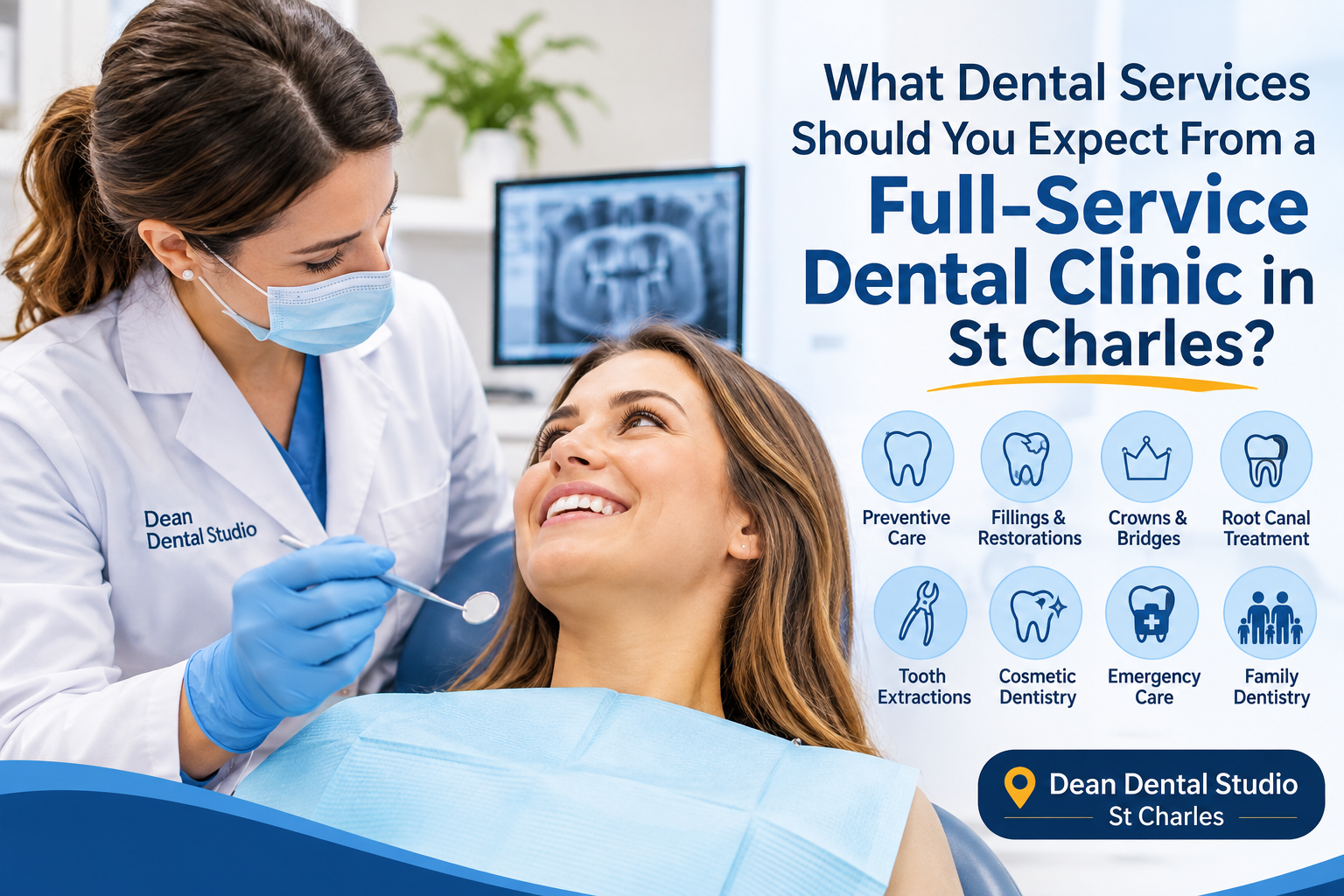
Choosing the right dental clinic is about more than finding a place to treat a toothache. A reliable dental practice should offer a range of services that support your oral health at every stage, from routine dental cleanings and preventive care to restorative procedures and cosmetic treatments. Having access to multiple dental services in one location can also make it easier to manage appointments, understand treatment options, and maintain consistent dental care.
If you are searching for a Dental Clinic St Charles, understanding which services a full-service dental practice should provide can help you make a more informed decision. Whether you need a regular dental examination, treatment for a damaged tooth, teeth whitening, or emergency dental care, knowing what to expect will help you choose a clinic that meets your needs.
For individuals and families considering Dean Dental Studio, understanding the different areas of dental care is a useful starting point when planning long-term oral health.
What Is a Full-Service Dental Clinic?
A full-service dental clinic provides several types of dental treatments under one practice. Instead of visiting different providers for every dental concern, patients can often receive preventive, diagnostic, restorative, and cosmetic dental care in the same location.
The exact services vary by practice, but a comprehensive dental clinic in St Charles may offer:
- Routine dental examinations
- Professional teeth cleaning
- Digital dental X-rays
- Tooth-colored fillings
- Dental crowns and bridges
- Root canal treatment
- Tooth extractions
- Cosmetic dentistry
- Teeth whitening
- Dental emergency consultations
- Family and general dentistry
The main advantage is continuity of care. A dental professional who understands your dental history can help identify recurring problems, monitor changes, and recommend appropriate treatment based on your individual needs.
1. Routine Dental Examinations and Preventive Care
Preventive dentistry is one of the most important services offered by a full-service dental clinic. Regular dental examinations help identify potential problems before they develop into more complicated conditions.
During a routine dental checkup, your dentist may examine:
- Teeth for cavities, cracks, and worn enamel
- Gums for inflammation, bleeding, or signs of periodontal disease
- Existing fillings, crowns, and other restorations
- Bite alignment and tooth positioning
- Soft tissues inside the mouth
- Signs of infection or other oral health concerns
The dentist may also recommend dental X-rays when necessary to evaluate areas that cannot be examined during a visual checkup.
Why Are Regular Dental Checkups Important?
Some dental problems do not cause noticeable discomfort during their early stages. A small cavity, for example, may develop without obvious symptoms. Waiting until the tooth begins to hurt can mean that more extensive treatment is needed.
Regular dental visits can help you:
- Identify cavities before they become larger.
- Monitor gum health and reduce the risk of advanced gum disease.
- Check older dental restorations for damage.
- Receive personalized oral hygiene recommendations.
- Maintain a consistent dental care routine.
Most people benefit from dental checkups at intervals recommended by their dentist. Although six-month visits are common, your ideal schedule may depend on your oral health, medical history, and risk factors.
2. Professional Teeth Cleaning
Even with regular brushing and flossing, plaque can accumulate in areas that are difficult to clean properly. When plaque hardens, it forms tartar, which cannot be removed through ordinary brushing.
Professional dental cleaning helps remove accumulated plaque and tartar from the teeth and along the gumline.
What Happens During a Professional Cleaning?
A typical dental cleaning appointment may include:
- Oral examination: The dental professional checks your teeth and gums before cleaning.
- Plaque and tartar removal: Specialized instruments are used to remove hardened deposits.
- Tooth polishing: The teeth are polished to remove certain surface stains and smooth the tooth surfaces.
- Flossing: Areas between the teeth are cleaned to remove remaining debris.
- Personalized advice: You may receive recommendations about brushing techniques, flossing, and other preventive measures.
Patients with gum inflammation or periodontal disease may need a more involved cleaning procedure, such as scaling and root planing.
If you are comparing dental cleaning services in St Charles, ask whether the practice provides preventive assessments and recommendations alongside routine cleaning.
3. Tooth-Colored Fillings and Cavity Treatment
Dental cavities are among the most common reasons people visit a general dentist. They develop when bacteria and acids gradually damage the tooth enamel.
When decay is detected early, a dental filling may be sufficient to restore the affected tooth.
What Are Tooth-Colored Fillings?
Composite fillings are made from a tooth-colored resin material that can be matched to the natural shade of your teeth. They are commonly used to repair cavities and certain minor areas of tooth damage.
The treatment generally involves:
- Examining the affected tooth.
- Removing the decayed portion.
- Cleaning the prepared area.
- Applying and shaping the filling material.
- Hardening the material and checking the bite.
The final restoration is designed to protect the remaining tooth structure and restore its function.
When Should You Consider a Dental Filling?
You may need an examination if you experience:
- Sensitivity to hot or cold foods.
- Pain when chewing.
- Visible dark spots or holes in a tooth.
- Food frequently getting stuck in one area.
- Persistent discomfort around a particular tooth.
Not every cavity requires the same treatment. Larger areas of decay may need a crown or another restorative procedure instead of a standard filling.
4. Dental Crowns and Bridges
When a tooth is significantly damaged, weakened, or missing, restorative dentistry can help improve oral function and appearance.
Dental crowns and bridges are two common restorative options offered by many comprehensive dental practices.
Dental Crowns
A dental crown is a custom-made covering placed over a damaged or weakened tooth. It helps restore the tooth's shape, strength, and function.
A dentist may recommend a crown when:
- A tooth has extensive decay.
- A tooth has undergone root canal treatment.
- A large filling has weakened the remaining structure.
- A tooth is cracked or significantly worn.
- An existing crown needs replacement.
Crowns may be made from porcelain, ceramic, metal, or combinations of materials. Your dentist can explain the advantages, appearance, durability, and cost of each option.
Dental Bridges
A dental bridge replaces one or more missing teeth by using supporting teeth or other appropriate dental structures.
A bridge may help:
- Restore chewing ability.
- Improve the appearance of your smile.
- Prevent nearby teeth from shifting into the gap.
- Support better distribution of biting forces.
However, bridges are not suitable for every patient. Your dentist will assess the health of the surrounding teeth, gums, and supporting structures before recommending treatment.
5. Root Canal Treatment
A root canal may be necessary when the soft tissue inside a tooth, known as the dental pulp, becomes infected or severely inflamed.
This can happen because of deep decay, a crack, repeated dental procedures, or an injury.
Common symptoms that may indicate the need for a root canal include:
- Persistent toothache.
- Sensitivity to heat or cold that lingers.
- Pain when biting or chewing.
- Swelling around the affected tooth.
- A darkened tooth.
- A pimple-like swelling on the gums.
What Does Root Canal Treatment Involve?
During the procedure, the dentist removes the infected or inflamed pulp, cleans the inside of the tooth, and seals the root canal space.
A restoration, often a dental crown depending on the tooth and its condition, may be recommended afterward to protect the remaining structure.
The goal is to preserve the natural tooth whenever possible rather than remove it unnecessarily.
If you experience persistent tooth pain, scheduling an examination at a dental clinic in St Charles is important. Early evaluation can help determine whether root canal treatment or another procedure is appropriate.
6. Tooth Extractions and Surgical Dental Care
Although dentists generally aim to preserve natural teeth, extraction may sometimes be necessary.
A dentist may recommend removing a tooth when it is:
- Severely damaged beyond restoration.
- Affected by extensive decay.
- Associated with advanced periodontal disease.
- Causing complications because of its position.
- Impacted or creating problems for nearby teeth.
Wisdom teeth are another common reason for dental extraction. They may need to be removed if they are impacted, repeatedly infected, or causing damage to neighboring teeth.
What Should You Ask Before an Extraction?
Before agreeing to the procedure, discuss:
- Why the tooth needs to be removed.
- Whether alternative treatments are available.
- Whether the extraction will be simple or surgical.
- What anesthesia or sedation options are appropriate.
- Expected recovery time and aftercare.
- Whether the missing tooth should be replaced.
Understanding these details helps you prepare for treatment and avoid unexpected costs or complications.
7. Cosmetic Dentistry for a More Confident Smile
Not every dental appointment is focused on treating disease or damage. Cosmetic dentistry addresses concerns related to the appearance of your teeth and smile.
A dental clinic offering cosmetic services may provide several treatment options depending on the dentist's qualifications and available facilities.
Common Cosmetic Dental Treatments
Professional Teeth Whitening
Professional whitening can help reduce certain stains caused by coffee, tea, tobacco, and aging. Your dentist can assess whether whitening is suitable and recommend an appropriate treatment method.
Dental Veneers
Veneers are thin coverings placed over the front surfaces of teeth. They may help improve the appearance of discolored, uneven, chipped, or slightly irregular teeth.
Cosmetic Bonding
Dental bonding uses tooth-colored composite resin to repair minor chips, close certain small gaps, or improve the appearance of individual teeth.
Smile Makeovers
A smile makeover combines selected cosmetic and restorative treatments to address multiple concerns. Depending on your needs, it may involve whitening, veneers, crowns, or bonding.
How to Choose the Right Cosmetic Treatment
The most expensive procedure is not necessarily the best option.
Before choosing a cosmetic treatment, consider:
- Your current tooth and gum health.
- How much natural tooth structure needs to be altered.
- Expected treatment lifespan.
- Maintenance requirements.
- Total cost and possible future replacement expenses.
- Whether the procedure addresses your actual concern.
A responsible dentist should explain the benefits and limitations of each treatment before recommending a personalized plan.
8. Emergency Dental Care
Dental emergencies can happen unexpectedly. A sudden toothache, broken tooth, lost filling, or dental injury may require prompt professional attention.
A dental clinic in St Charles that offers emergency consultations can help patients understand the seriousness of their condition and determine the appropriate next steps.
Common Dental Emergencies
Severe Toothache: Persistent or intense tooth pain may indicate decay, infection, or damage inside the tooth.
Broken or Chipped Tooth: A broken tooth may expose sensitive inner structures and require prompt assessment.
Knocked-Out Permanent Tooth: This requires immediate dental attention. Pick up the tooth by its crown, avoid touching the root, and seek emergency care as quickly as possible. If possible, keep it moist in milk or an appropriate tooth-preservation solution.
Lost Filling or Crown: A missing restoration can leave the underlying tooth vulnerable to sensitivity and further damage.
Swelling or Dental Infection: Facial swelling, fever, or worsening pain may indicate a spreading infection and should be assessed urgently.
Difficulty breathing or swallowing, rapidly spreading swelling, or severe facial infection requires emergency medical attention rather than waiting for a routine dental appointment.
Questions to Ask About Emergency Dental Services
When choosing a dental clinic, find out:
- Whether same-day emergency appointments are available.
- What to do outside normal business hours.
- Whether the clinic treats broken teeth and severe toothaches.
- Whether emergency examination and treatment costs are explained beforehand.
Knowing these details in advance can save valuable time during a dental emergency.
9. Family Dentistry for Children and Adults
A family-friendly dental practice can make it easier for different members of your household to receive regular oral healthcare.
Children, teenagers, adults, and older patients have different dental needs. A comprehensive general dentistry practice should understand these differences and recommend suitable care.
Dental Care for Children
Children may need:
- Routine dental examinations.
- Professional cleanings.
- Cavity detection and treatment.
- Fluoride treatments when appropriate.
- Dental sealants for cavity prevention.
- Guidance on brushing and healthy eating habits.
Early dental visits can help children become comfortable with dental appointments and establish healthy habits.
Dental Care for Adults
Adult dental services often focus on:
- Preventing cavities and gum disease.
- Replacing damaged or missing teeth.
- Monitoring existing fillings and crowns.
- Managing tooth sensitivity.
- Addressing cosmetic concerns.
- Maintaining oral health as teeth and gums change with age.
If you are choosing a family dentist in St Charles, consider whether the practice can accommodate different age groups and explain preventive care in a way each patient can understand.
10. Digital Dental X-Rays and Diagnostic Technology
Modern dental clinics may use digital imaging and other diagnostic tools to evaluate oral health more accurately.
Digital dental X-rays can help dentists identify problems that may not be visible during a regular examination, including:
- Decay between teeth.
- Problems beneath existing restorations.
- Changes around tooth roots.
- Certain bone-related concerns.
- Impacted teeth.
- Other hidden dental abnormalities.
The type and frequency of imaging should be based on individual clinical needs rather than performed automatically at every visit.
When evaluating a dental clinic, ask what diagnostic technology is available and how it supports treatment planning.
How to Choose the Right Dental Clinic in St Charles
Knowing which services a clinic offers is only one part of choosing the right dental provider. You should also evaluate the quality of care, communication, convenience, and overall treatment experience.
Here are some practical factors to consider.
1. Check the Range of Dental Services
Look for a practice that offers the services you are most likely to need. If you require routine examinations, restorative dentistry, and cosmetic treatments, having access to these services in one practice may simplify your dental care.
However, remember that not every clinic performs every specialized procedure. Ask whether referrals may be required for certain treatments.
2. Review Dentist Qualifications and Experience
Check the dentist's education, professional credentials, clinical experience, and areas of practice.
For complex procedures such as dental implants, oral surgery, or advanced cosmetic treatments, ask about relevant training and experience.
3. Evaluate Communication and Treatment Planning
A good dental experience starts with clear communication.
Your dentist should explain:
- The dental problem identified.
- Available treatment options.
- The advantages and limitations of each option.
- Expected treatment duration.
- Potential risks.
- Estimated costs.
Avoid committing to expensive procedures without understanding why they are recommended.
4. Consider Location and Appointment Availability
Convenience matters, particularly if you need multiple visits for restorative treatment.
Consider the clinic's location in St Charles, office hours, appointment availability, and emergency arrangements.
5. Read Patient Reviews Carefully
Online reviews can provide useful information about patient experiences.
Look for recurring comments about:
- Appointment scheduling.
- Staff communication.
- Treatment explanations.
- Office cleanliness.
- Billing transparency.
- Follow-up care.
Do not rely on a single positive or negative review. Consider the overall pattern of feedback.
Understanding the Cost of Dental Services in St Charles
Dental treatment costs vary depending on the procedure, materials, complexity, insurance coverage, and individual clinical requirements.
For example, a routine cleaning generally involves different costs from a root canal, crown, or cosmetic procedure.
Before beginning treatment, ask the clinic for a clear cost estimate.
Important pricing considerations include:
- Initial consultation or examination fees.
- Dental X-ray charges.
- Professional cleaning costs.
- Filling and restorative treatment fees.
- Crown and bridge material options.
- Emergency examination charges.
- Insurance coverage and out-of-pocket expenses.
- Follow-up appointments and maintenance costs.
For larger procedures, ask whether treatment can be completed in stages and whether payment arrangements are available.
It is also important to compare treatment value rather than simply choosing the lowest price. The materials used, dentist's experience, treatment planning, and long-term maintenance requirements all matter.
Why Consider Dean Dental Studio for Dental Care in St Charles?
When selecting a dental provider, patients should look for a practice that takes time to understand their concerns and explains treatment options clearly.
Dean Dental Studio is a practice to consider when researching dental care in St Charles. Before scheduling an appointment, patients can ask about available general, preventive, restorative, cosmetic, and emergency dental services to determine whether the practice meets their specific requirements.
Whether you are planning a routine dental examination, need help with a damaged tooth, or want to discuss ways to improve your smile, start with a professional evaluation.
A personalized treatment recommendation is more useful than choosing a procedure based only on online information.
Frequently Asked Questions About Dental Clinics in St Charles
1. What services does a full-service dental clinic in St Charles offer?
A full-service dental clinic may provide preventive examinations, professional cleanings, fillings, dental crowns, root canal treatment, tooth extractions, cosmetic dentistry, and emergency dental consultations. Available services vary by practice.
2. How often should I visit a dental clinic in St Charles?
Many patients schedule dental examinations and cleanings every six months. However, people with gum disease, frequent cavities, or other oral health concerns may need more frequent appointments based on their dentist's recommendations.
3. How much does a dental checkup cost in St Charles?
The cost depends on the clinic, examination requirements, X-rays, insurance coverage, and additional services. Contact the dental practice directly for an accurate estimate before scheduling.
4. Can I get cosmetic and general dental treatments at the same clinic?
Many comprehensive dental practices offer both general and cosmetic treatments. These may include routine examinations, fillings, teeth whitening, veneers, and bonding. Confirm the available services and whether specialized referrals are necessary.
5. When should I visit a dentist for a toothache?
You should arrange a dental examination if you experience persistent tooth pain, sensitivity, swelling, or discomfort while chewing. Severe pain, facial swelling, fever, or signs of infection require urgent assessment.
6. Does a full-service dental clinic provide treatment for children?
Some full-service practices provide family dentistry for children and adults. Ask about pediatric dental examinations, preventive treatments, cavity care, and the age groups the clinic accommodates.
7. What should I bring to my first dental appointment?
Bring your dental and medical history, a list of current medications, insurance information, previous dental records or X-rays if available, and details about any symptoms you are experiencing.
8. How do I choose the best dental clinic in St Charles?
Compare the clinic's available services, dentist qualifications, patient reviews, appointment availability, communication, treatment options, and pricing transparency. Choose a practice that explains your dental needs and provides recommendations based on your individual condition.
Conclusion
Choosing the right dental clinic involves understanding the services available and determining whether the practice can support your long-term oral health needs. From preventive examinations and professional cleanings to fillings, crowns, root canal treatment, cosmetic dentistry, and emergency consultations, a full-service dental clinic can make managing different dental concerns more convenient.
When comparing your options for a Dental Clinic St Charles, consider the dentist's experience, range of services, treatment approach, appointment availability, and cost transparency. Do not hesitate to ask questions before beginning a procedure.
If you are considering Dean Dental Studio, contact the practice to learn more about its available dental services and schedule an appointment. A professional dental examination can help you understand your current oral health, explore suitable treatment options, and take the next step toward maintaining a healthy smile.