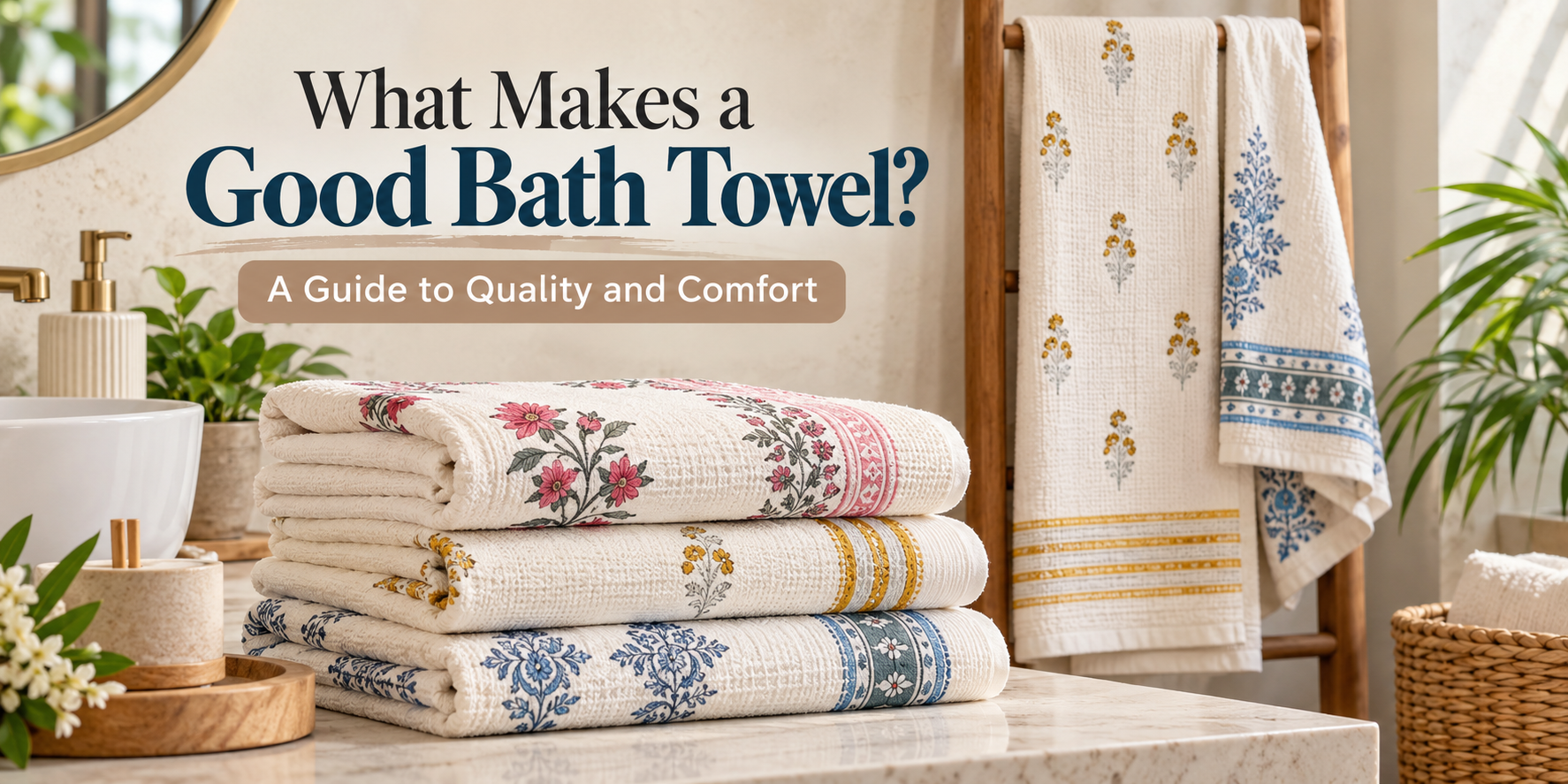
Choosing the right towel involves more than picking a colour or pattern that matches your bathroom. A good bath towel should absorb water effectively, feel comfortable against the skin, dry within a reasonable time, and maintain its quality after regular washing. Material, weave, thickness, size, and finishing all influence how well a towel performs in everyday use.
For shoppers looking for a reliable towel for their home, understanding these features makes it easier to compare products and choose the right option. Pure cotton towels, for example, are valued for their natural softness and absorbency, while different weaving techniques can influence their texture, appearance, and drying performance.
Peepul Tree offers a collection of pure cotton towels featuring traditional hand-block prints, floral motifs, and coordinated designs. These towels combine everyday functionality with textile patterns that complement thoughtfully styled bathrooms. Before choosing a towel for your home, it helps to understand the qualities that distinguish a well-made product from an ordinary one.
What Makes a Good Bath Towel?
A good bath towel balances absorbency, comfort, durability, and ease of care. A towel that feels thick in a shop may not necessarily absorb water well, while a lightweight towel may be more practical for everyday use if it dries quickly.
When evaluating a bath towel, consider these essential characteristics:
- Absorbency: The towel should remove moisture from your skin without requiring excessive rubbing.
- Softness: The fabric should feel comfortable against the skin, particularly when used on the face and body.
- Durability: The fibres, stitching, and edges should withstand regular washing without deteriorating quickly.
- Suitable thickness: The towel should provide enough coverage and comfort without becoming unnecessarily bulky.
- Practical drying time: The fabric should dry reasonably well in the conditions available at home.
- Reliable construction: Neat hems, consistent weaving, and secure finishing help maintain the towel's shape.
- Design and colour: The pattern should suit your bathroom and remain appealing with regular use.
No single feature determines overall quality. The best towel for your home is one that meets your expectations for comfort, absorbency, maintenance, and price.
1. Choose the Right Towel Material
The material is one of the first things to check when buying a bath towel. It affects how the fabric feels, how much water it absorbs, and how it performs after repeated washing.
Pure Cotton Towels for Everyday Comfort
Cotton towels are a popular choice for bathrooms because cotton fibres can absorb moisture while providing a comfortable feel against the skin. They are suitable for everyday bathing, hand drying, and general household use.
When shopping for a cotton towel, check whether the product description clearly identifies its material composition. Also consider the weave, fabric construction, and care instructions rather than assuming that every cotton towel will perform identically.
Pure cotton towels are worth considering if you want:
- A natural-feeling fabric for regular use.
- Comfortable contact with the skin.
- Absorbency for everyday drying.
- A versatile option for guest bathrooms and family use.
- Printed designs that complement your bathroom décor.
Peepul Tree's pure cotton towel collection includes individual hand towels, bath towels, and coordinated towel sets. Its hand-block printed designs feature floral and traditional motifs, offering an alternative to plain bathroom textiles.
Cotton vs Microfiber Towels
Cotton and microfiber towels serve different preferences. Cotton is often chosen for its familiar texture and absorbency, whereas microfiber towels are generally lightweight and can dry quickly, depending on their construction.
If you prefer a traditional towel for your daily bath, cotton may be a suitable option. If compact storage, lightweight packing, or quick drying is your main priority, a microfiber towel may be worth considering.
The right choice depends on how you intend to use the towel rather than on the material name alone.
2. Understand Absorbency Before Buying
Absorbency is one of the most important qualities of a good bath towel. After bathing, you want a towel that takes up moisture efficiently and leaves your skin feeling comfortable.
Cotton fibres can absorb water, but actual performance depends on several factors, including yarn quality, weave, fabric density, and any finishes applied during manufacturing.
How to Assess Towel Absorbency
Before purchasing a towel online, look for the following details:
- Material composition: Check whether the towel is made from pure cotton, a cotton blend, or synthetic fibres.
- Fabric construction: A well-made terry towel has loops that help hold moisture. Other weaves may offer a different balance of absorbency and texture.
- Product specifications: Look for clear descriptions of the towel's intended use, material, and care requirements.
- Customer feedback: Reviews mentioning actual drying performance may help you understand how the towel performs after use and washing.
- Care instructions: Fabric softener residue can reduce water absorption, so proper maintenance matters.
Do not judge a towel's absorbency by its appearance alone. A decorative towel may have an attractive pattern and comfortable texture, but it should also suit the drying task for which you plan to use it.
3. Check the Towel's Softness and Texture
A towel should feel pleasant against the skin, especially when you use it immediately after bathing. However, softness is not the only measure of quality.
Some towels feel exceptionally plush when new but become less comfortable after repeated washing. Others have a slightly firmer texture that remains practical for regular household use.
What Influences Towel Softness?
Several factors contribute to the feel of a towel:
- Fibre quality: The characteristics of the cotton fibres influence the resulting fabric texture.
- Yarn construction: Different yarns can produce different levels of smoothness and surface texture.
- Weave: Terry loops, flat weaves, and other constructions create distinct tactile experiences.
- Finishing: Manufacturing finishes may affect how a towel feels when new.
- Washing and drying: Detergent residue, excessive heat, and heavy use of fabric softener can affect the fabric over time.
If you prefer a gentle, comfortable feel, choose a towel with a texture that suits your skin and intended use. Read the care label and follow the recommended washing instructions to help maintain its original qualities.
4. Consider GSM and Towel Thickness
GSM stands for grams per square metre. It measures fabric weight and is commonly used to describe towel thickness and density.
A higher GSM often indicates a heavier towel, but it does not automatically mean that the towel is more absorbent, softer, or more durable. Material, yarn quality, and construction remain important.
How to Choose the Right GSM
The following ranges can serve as a general buying guide. Actual performance varies by fabric and construction.
- Around 300–400 GSM: Often suitable for lightweight towels that are easier to handle and may dry quickly.
- Around 400–600 GSM: A versatile range for many everyday bath towels, balancing coverage and weight.
- Around 600–800 GSM: Often associated with heavier, plusher towels that may take longer to dry.
- Above 800 GSM: Very heavy towels that can provide a substantial feel but may require more drying time and storage space.
These ranges are indicative, not universal quality standards. Check the actual GSM where the manufacturer provides it, and avoid assuming that a towel is low quality simply because it is lightweight.
For everyday family use, a moderately weighted towel may be more practical than an especially thick one. If you enjoy a heavier towel, make sure your bathroom has adequate ventilation and drying space.
5. Select a Towel Size That Suits Your Needs
The right size makes a difference to comfort and convenience. A small towel may be sufficient for drying your hands, but it will not offer the same coverage as a full-size bath towel.
Common Towel Types and Their Uses
Bath towels: Designed for drying the body after a bath or shower. Check the dimensions to ensure sufficient coverage.
Bath sheets: Larger than standard bath towels, making them suitable for people who prefer additional coverage.
Hand towels: Useful near bathroom sinks for drying hands. They are also practical for guest bathrooms.
Face towels: Smaller towels intended for gentle facial drying. Keep them clean and separate from towels used for other purposes.
Towel sets: A coordinated set can make it easier to maintain a consistent look across your bathroom while providing different sizes for daily routines.
Before buying a towel online, check the product dimensions rather than relying only on labels such as bath towel or hand towel. Sizes can vary between manufacturers.
If you are furnishing a family bathroom, a practical starting point is to keep enough bath towels for regular use, along with separate hand towels near the sink. Additional towels can be useful for guests and laundry days.
6. Inspect Stitching, Hems, and Overall Construction
A towel's appearance is important, but construction determines how well it holds up to regular use. Poorly finished edges may unravel, while loose threads can affect the appearance and longevity of the fabric.
When examining a towel, look for:
- Secure hems: The edges should be neatly finished, without obvious gaps or loose stitching.
- Consistent fabric: The weave should appear reasonably even, without conspicuous thin areas.
- Neat finishing: Decorative borders and printed sections should be finished carefully.
- Clear care instructions: The product should explain how to wash and maintain the fabric.
- Accurate product information: Material composition, dimensions, and set contents should be clearly stated.
For printed cotton towels, consider both the quality of the base fabric and the appearance of the printed design. A well-balanced pattern can make a practical household item feel more considered without compromising its everyday purpose.
7. Choose a Towel Design That Complements Your Bathroom
A towel is a functional product, but it also contributes to the overall appearance of a bathroom. The right colours and patterns can help create a coordinated space without requiring major changes to the room.
Plain Towels or Printed Towels?
Plain towels are versatile and work well in minimalist bathrooms. White, beige, grey, and muted shades can complement a wide range of fittings and wall colours.
Printed towels offer another way to introduce character through colour and pattern. Floral designs, traditional motifs, and decorative borders can work particularly well in bathrooms with natural materials, wooden accessories, or warm neutral finishes.
When choosing printed towels, consider the following:
- Match the main colours with your bathroom accessories.
- Use subtle patterns in smaller spaces to avoid a visually crowded appearance.
- Choose coordinated sets if you prefer a consistent look.
- Consider how the design will look when towels are folded or hung.
- Follow the care instructions to help preserve the fabric and printed appearance.
Peepul Tree's towel collection includes hand-block printed floral and traditional designs in combinations of white, blue, green, pink, and other colours. These options can suit bathrooms where patterned textiles complement the existing décor.
A practical approach is to choose a design you enjoy while keeping comfort, absorbency, and maintenance as your primary considerations.
8. Understand Towel Prices and Value for Money
Towel prices vary according to material, size, fabric weight, construction, design, and the number of pieces included in a set. The most expensive towel is not necessarily the best choice for every household.
When comparing products, assess the price alongside the specifications.
What Should You Compare Before Paying?
Material and quality: Confirm the stated fibre composition instead of relying on words such as premium or luxury.
Size: A larger towel uses more fabric and may be priced differently from a smaller one.
Number of pieces: A towel set may contain bath towels, hand towels, face towels, or a combination of sizes. Confirm the exact contents.
Construction and design: Decorative borders and printed patterns may influence the product's price.
Maintenance requirements: A towel that suits your washing routine and available drying space may offer better everyday value than one that requires more effort to maintain.
Discounted pricing: Compare the current selling price with the product specifications and check the listed original price where relevant.
For example, someone furnishing a guest bathroom may prefer a coordinated set, while a household replacing a frequently used bath towel may be better served by purchasing individual pieces. The most sensible option depends on the number of towels needed and how often they will be used.
Peepul Tree offers individual cotton towels and coordinated sets, allowing shoppers to consider different options based on their household requirements and preferred designs. Check the current product listing for available sizes, prices, and set details before purchasing.
9. Common Mistakes to Avoid When Buying a Towel
Even an attractive towel may disappoint if it does not suit your needs. Avoid these common buying mistakes.
Choosing Thickness Over Performance
A thick towel can feel luxurious, but it may also take longer to dry. Consider your bathroom's ventilation and laundry routine before choosing a heavier option.
Ignoring the Material Composition
Do not assume that every towel advertised as soft or premium is made from pure cotton. Check the product description for accurate material information.
Overlooking Dimensions
A towel's name does not guarantee a particular size. Read the listed measurements to ensure it provides sufficient coverage.
Buying Only for the Design
Printed towels can enhance bathroom décor, but colour and pattern should not replace checks for absorbency, construction, and care requirements.
Ignoring Washing Instructions
Incorrect washing and drying can affect softness, absorbency, and appearance. Check the recommended care instructions before making a purchase.
Comparing Prices Without Checking Set Contents
A lower-priced set may contain smaller towels or fewer pieces. Compare the contents and dimensions before deciding which product offers better value.
10. How to Keep Your Bath Towel Soft and Absorbent
The way you care for a towel influences its performance over time. Regular cleaning and appropriate drying can help maintain its comfort and usability.
Follow these practical tips:
- Wash before first use: Follow the manufacturer's instructions to remove manufacturing residue and prepare the fabric for use.
- Use an appropriate detergent quantity: Excess detergent can build up in the fibres and affect absorbency.
- Avoid excessive fabric softener: Frequent use may leave a coating that reduces water absorption.
- Separate heavily soiled laundry: This helps prevent dirt and residue from transferring to clean towels.
- Dry thoroughly: Hang towels in a well-ventilated area after use to reduce lingering moisture and unpleasant odours.
- Follow temperature guidance: Use the washing temperature recommended on the care label.
- Avoid storing damp towels: Ensure they are dry before placing them in cupboards or linen storage.
Wash bath towels regularly according to how frequently they are used, and launder face and hand towels as appropriate for their purpose. Replace towels when they develop persistent odours, thinning areas, damaged hems, or a noticeable decline in drying performance.
Frequently Asked Questions About Towels
1. What is the best material for a bath towel?
Pure cotton is a popular choice for bath towels because it combines moisture absorption with a comfortable feel. However, the best material depends on your preferences, drying conditions, and intended use. Always consider the fabric construction alongside its composition.
2. How can I tell if a towel is good quality?
Check the material, dimensions, stitching, fabric consistency, and care instructions. If GSM is listed, use it as one factor rather than the only measure of quality. Customer reviews can also provide useful information about softness and performance after washing.
3. Is a higher GSM towel always better?
No. Higher GSM generally indicates heavier fabric, but it does not guarantee better absorbency or durability. A medium-weight towel may be more convenient for daily use because it can balance coverage, handling, and drying time.
4. What is the difference between a bath towel and a hand towel?
A bath towel is designed to dry the body after bathing, while a hand towel is smaller and generally kept near the sink for drying hands. Always check the product dimensions because sizes vary by brand.
5. How often should I replace my bath towel?
There is no fixed replacement schedule for every towel. Replace one when it becomes persistently odorous despite washing, loses its absorbency, develops thinning patches, or has damaged seams. Proper cleaning and drying can help extend its useful life.
6. How do I keep cotton towels soft after washing?
Use an appropriate amount of detergent, avoid excessive fabric softener, and dry the towel according to its care instructions. Preventing detergent buildup and allowing the towel to dry thoroughly can help maintain its feel and performance.
7. Are printed cotton towels suitable for everyday use?
Yes, provided the towel's material, construction, and care requirements suit your needs. Printed cotton towels can combine everyday utility with decorative appeal. Follow the manufacturer's washing instructions to help maintain the fabric and printed design.
8. What should I check before buying towels online?
Check the material composition, dimensions, product images, care instructions, price, customer reviews, and the number of pieces included. For a towel set, confirm whether it contains bath towels, hand towels, face towels, or a combination of these.
Conclusion: Choose a Towel That Combines Comfort and Practicality
A good bath towel should meet your everyday needs without making maintenance unnecessarily difficult. Material, absorbency, softness, GSM, size, construction, and care requirements all contribute to the overall experience. By comparing these features before purchasing, you can choose a towel that suits your bathing routine, bathroom space, and budget.
If you appreciate cotton textiles with traditional patterns, Peepul Tree's towel collection offers individual towels and coordinated sets featuring hand-block printed designs. Explore the available options, compare product specifications, and select towels that bring together everyday comfort and a considered bathroom aesthetic.